
Colic in Babies | A Nervous System Perspective for San Diego Parents
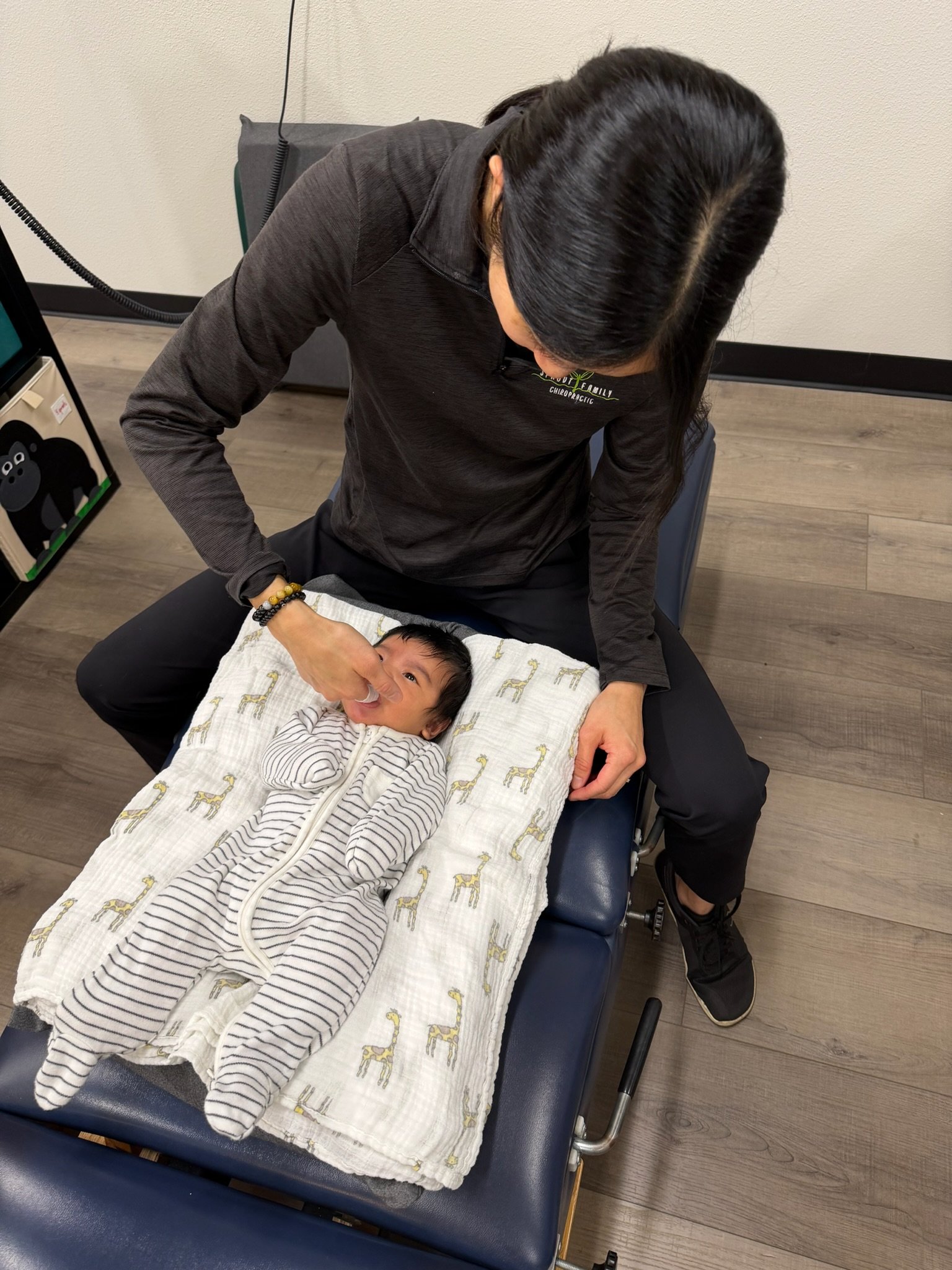
If you’re a San Diego parent of a newborn who cries for hours, seems impossible to soothe, or never truly settles, you may have been told:
“It’s just colic.”
“They’ll grow out of it.”
“Some babies just cry more.”
But when you’re the one holding a crying baby — exhausted, worried, and unsure what to do — those answers don’t feel like enough.
Many parents come to Sprout Family Chiropractic not because they’re looking for a miracle cure, but because they’re asking a deeper question: Why is my baby so uncomfortable — and what can I do to support them?
What Parents Mean When They Say “Colic”
Colic is typically described as:
Prolonged, intense crying
Often in the late afternoon or evening
A baby who seems uncomfortable or distressed
Difficulty soothing, even with feeding or holding
A baby who appears tense, stiff, or unsettled
Importantly, colic is not a diagnosis — it’s a description of a pattern.
And for many parents, the most confusing part is this: “Nothing seems medically wrong… but something clearly isn’t right.”
Colic Is Not a Behavior Problem
Babies do not cry to manipulate.
Crying is their only form of communication.
When a baby cries excessively, it is often their nervous system signaling:
Overwhelm
Discomfort
Difficulty regulating sensory input
Trouble settling into calm states
This doesn’t mean something is “broken.”
It means the system is having a hard time adapting.
A Nervous System Perspective on Colic
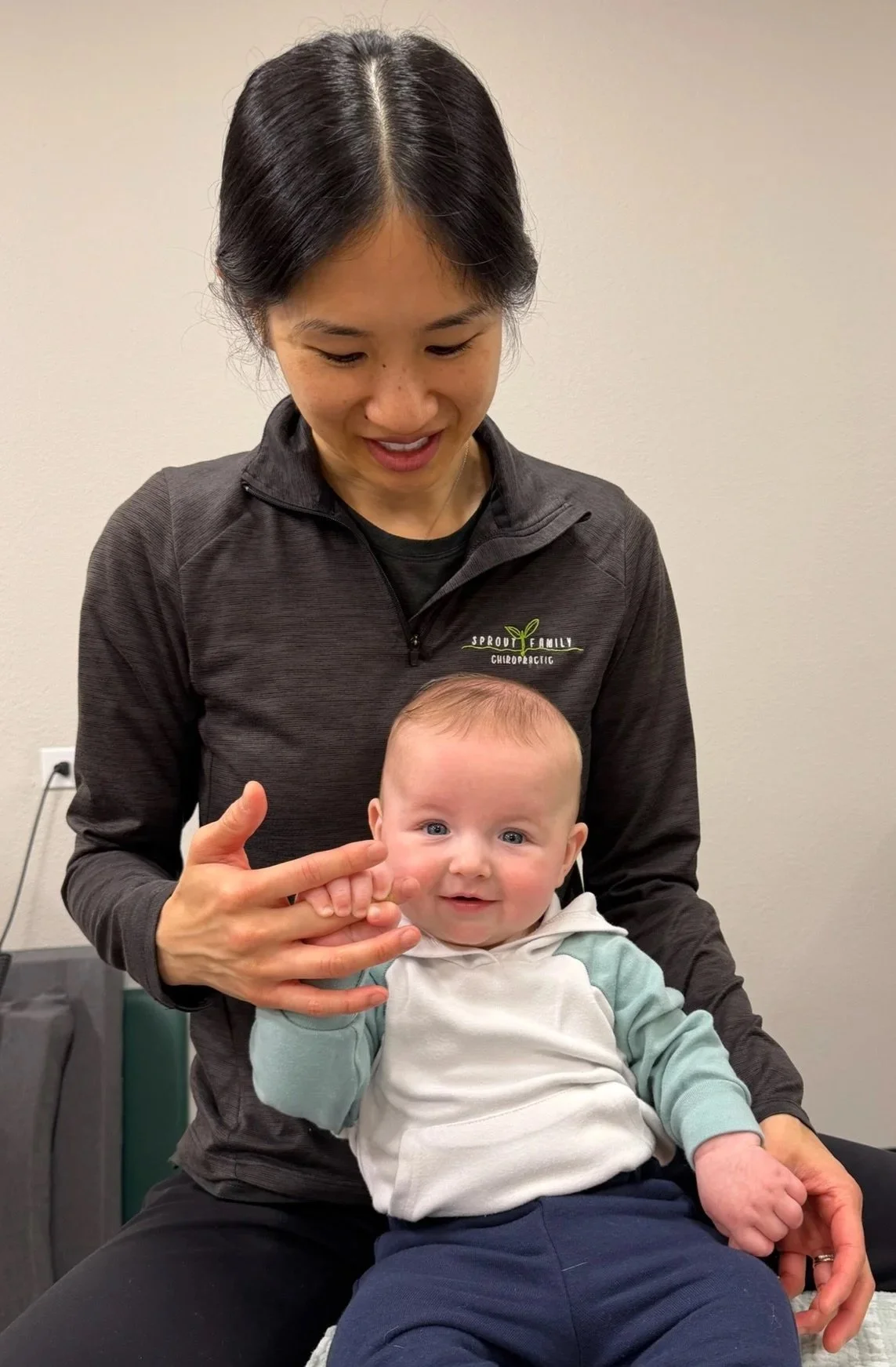
Dr. Nicole, pediatric chiropractor, in San Diego
From a nervous system lens, colic can be understood as a regulation challenge.
Newborns are learning how to:
Process sensory input (sound, light, touch, movement)
Coordinate digestion and feeding
Shift between alertness and calm
Recover from stress
For some babies, especially those who experienced:
Long or difficult labor
Assisted delivery
C-section birth
In-utero constraint
Early feeding challenges
…the nervous system may be overstimulated or overwhelmed.
This can show up as prolonged crying, tension, and difficulty settling.
Why Colic Often Gets Worse in the Evening
Many San Diego parents notice colic symptoms peak later in the day.
This is not random.
Throughout the day, a baby accumulates:
Sensory input
Handling and movement
Feeding demands
Environmental stimulation
By evening, the nervous system may simply be out of capacity.
Crying becomes the body’s way of releasing stress when regulation is difficult.
Colic, Digestion, and the Nervous System
Digestion is closely tied to the nervous system.
The “rest-and-digest” state allows the gut to function smoothly.
When a baby’s nervous system is stuck in a stress state:
Digestion may feel uncomfortable
Gas and reflux sensations may be harder to tolerate
Feeding may not be calming
This does not mean colic is caused by digestive disease.
It means digestion and regulation are deeply connected.
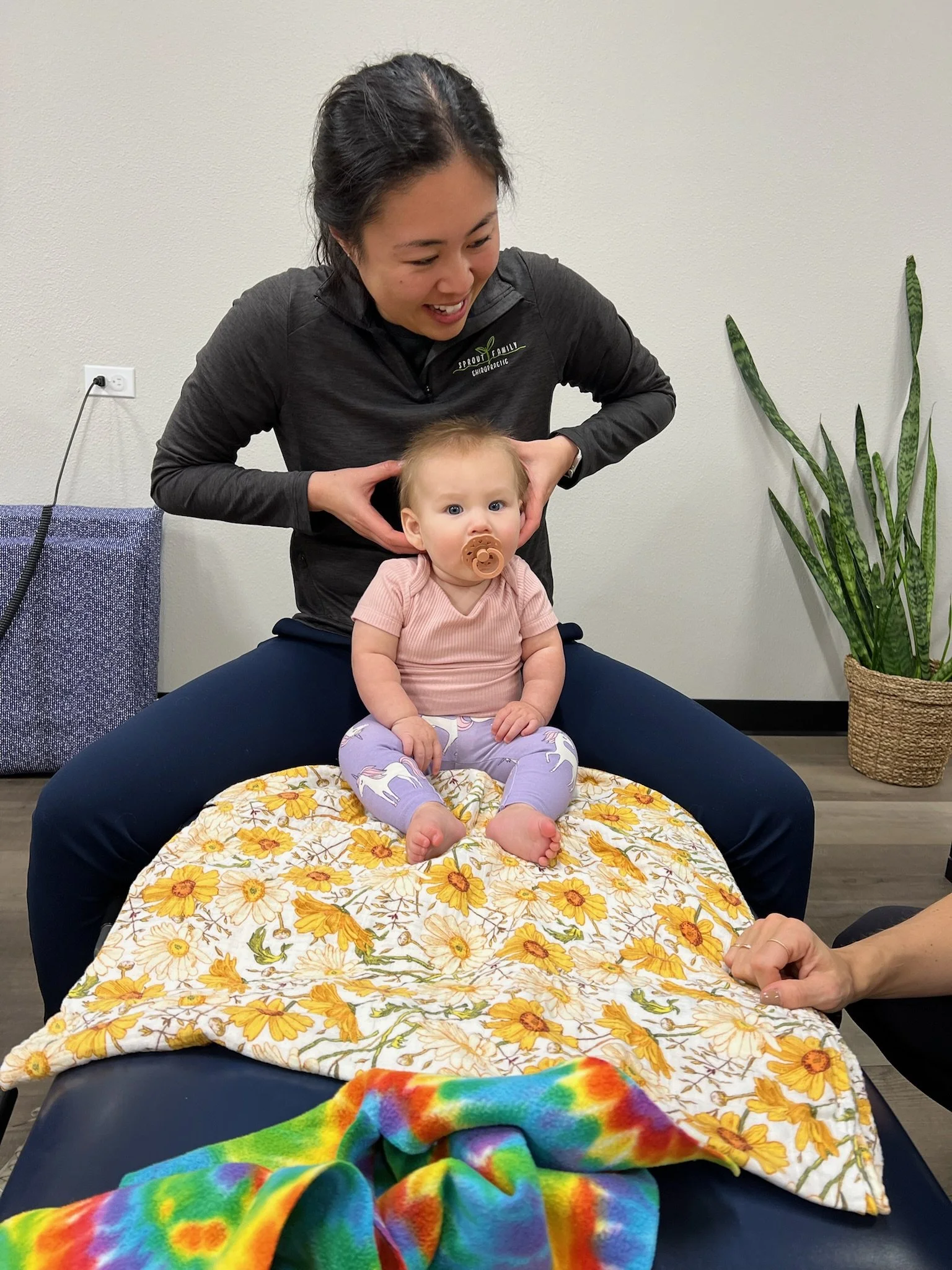
San Diego baby chiropractor Dr. Rachel adjusting
Why Parents Look Beyond “Waiting It Out”
While many babies eventually outgrow colic, parents often seek support because:
Crying affects bonding and confidence
Sleep deprivation impacts mental health
They feel something more supportive is possible
They want to help their baby feel more comfortable now
Seeking support is not overreacting.
It’s responsive parenting.
How Nervous System–Focused Chiropractic Care Fits In
At Sprout Family Chiropractic in San Diego, we do not diagnose or treat colic.
Our focus is the nervous system.
Neurologically focused pediatric chiropractic care is designed to:
Reduce physical stress on the nervous system
Support clearer brain-body communication
Improve regulation and adaptability
Help babies settle more comfortably
Care for infants is:
Gentle
Specific
Age-appropriate
Focused on regulation, not force
We also use objective nervous system scans (when appropriate) to help parents understand how their baby’s nervous system is adapting to the world.
The goal is not to stop crying.
The goal is to support a nervous system that can regulate, settle, and adapt more easily.
What Parents Often Notice Over Time
Every baby is different, but parents may report:
Improved ability to settle
Shorter crying episodes
Softer body tension
Easier transitions between awake and sleep
More relaxed feeding experiences
These changes reflect improved regulation, not suppression.
Key Takeaways for San Diego Parents
Colic is a description, not a diagnosis
Excessive crying is communication, not behavior
The nervous system plays a central role in regulation
Evening crying often reflects accumulated stress
Supporting regulation supports comfort and adaptability
Frequently Asked Questions About Colic
Is colic harmful?
Colic itself is not harmful, but prolonged stress can be exhausting for both babies and parents. Support can help families cope more comfortably.
Does chiropractic care cure colic?
No. Pediatric chiropractic care does not cure or treat colic. It supports nervous system regulation, which may help babies adapt more comfortably.
Is chiropractic care safe for newborns?
Care for infants is gentle and specifically adapted for developing nervous systems. Parents are always informed and involved.
When should parents seek help?
Any time a parent feels concerned, overwhelmed, or wants additional support — trust your instincts.
A Final Message for Parents
You’re not imagining this.
Your baby isn’t “too much.”
They’re communicating the only way they can.
When we support the nervous system, we support a baby’s ability to settle, adapt, and feel safe in their body.
If you’re a San Diego parent navigating colic and wondering whether nervous system support could help your baby feel more comfortable, we’re here to guide that conversation.
Scientific References & Further Reading
Thayer, J. F., & Lane, R. D. (2000). A model of neurovisceral integration in emotion regulation and dysregulation. Journal of Affective Disorders, 61, 201–216.
Porges, S. W. (2011). The Polyvagal Theory: Neurophysiological Foundations of Emotions, Attachment, Communication, and Self-Regulation.W.W. Norton & Company.
McEwen, B. S. (2007). Physiology and neurobiology of stress and adaptation: Central role of the brain. Physiological Reviews, 87(3), 873–904.
Huerta, T. S., et al. (2025). Neural representation of cytokines by vagal sensory neurons. Nature Communications, 16, 3840.
Proudly supporting kids with ADHD across Clairemont, Mira Mesa, Scripps Ranch, Kearny Mesa, La Jolla, and all of San Diego
Sprout Family Chiropractic | Pediatric + Nervous System Experts
Disclaimer: This article is for educational purposes and is not intended as medical advice. Always consult your child’s healthcare provider for personalized guidance.