
Delayed Walking & Motor Milestones in Toddlers | San Diego Parents Guide

If you’re a San Diego parent wondering why your toddler isn’t walking yet, seems unsteady on their feet, avoids climbing or stairs, or reached motor milestones later than peers, you may have heard:
“They’ll do it when they’re ready.”
“Every child develops at their own pace.”
“Don’t compare.”
While those statements are often true, many parents still feel a quiet concern — especially when movement seems hard, awkward, or stressful for their child.
Parents often come to Sprout Family Chiropractic asking a very reasonable question: Is my child’s nervous system getting the support it needs to develop movement confidently?
What Parents Mean by “Delayed Motor Milestones”

Gentle adjustments at Sprout Family Chiropractic in San Diego
Parents may notice:
Late crawling, standing, or walking
Preference for sitting rather than moving
Poor balance or frequent falls
Stiff or floppy movement patterns
Avoidance of climbing, running, or playground activities
Fatigue with physical activity
Motor delays don’t always look dramatic.
Sometimes they’re subtle, but persistent.
Motor Development Is a Nervous System Process
Movement doesn’t originate in the muscles —
it’s organized by the nervous system.
Motor milestones require:
Postural stability
Balance and coordination
Muscle tone regulation
Sensory processing
Integration between brain and body
When the nervous system is well regulated, movement emerges naturally.
When regulation is challenging, movement may feel effortful, delayed, or uncoordinated.
A Nervous System Perspective on Delayed Walking

Gentle San Diego pediatric chiropractic adjustments for babies and kids
From a nervous system lens, delayed motor milestones may reflect:
Difficulty integrating sensory input (vestibular, proprioceptive)
Challenges with balance and postural control
Protective movement patterns due to tension or instability
Reduced confidence in movement
Toddlers who experienced:
Difficult or prolonged birth
Early motor asymmetry (head preference, torticollis)
Limited floor play due to discomfort
Early illness or stress
…may show delayed or hesitant motor development — not because they can’t move, but because movement feels less safe or organized.
Why Some Toddlers “Skip” Crawling or Avoid Movement
Some children:
Skip crawling entirely
Crawl asymmetrically
Walk late but then seem cautious
Avoid weight-bearing activities
These patterns can reflect how the nervous system learned to adapt early on.
Motor development isn’t a checklist — it’s a process of building confidence, stability, and coordination.
How Sensory Processing Affects Motor Milestones
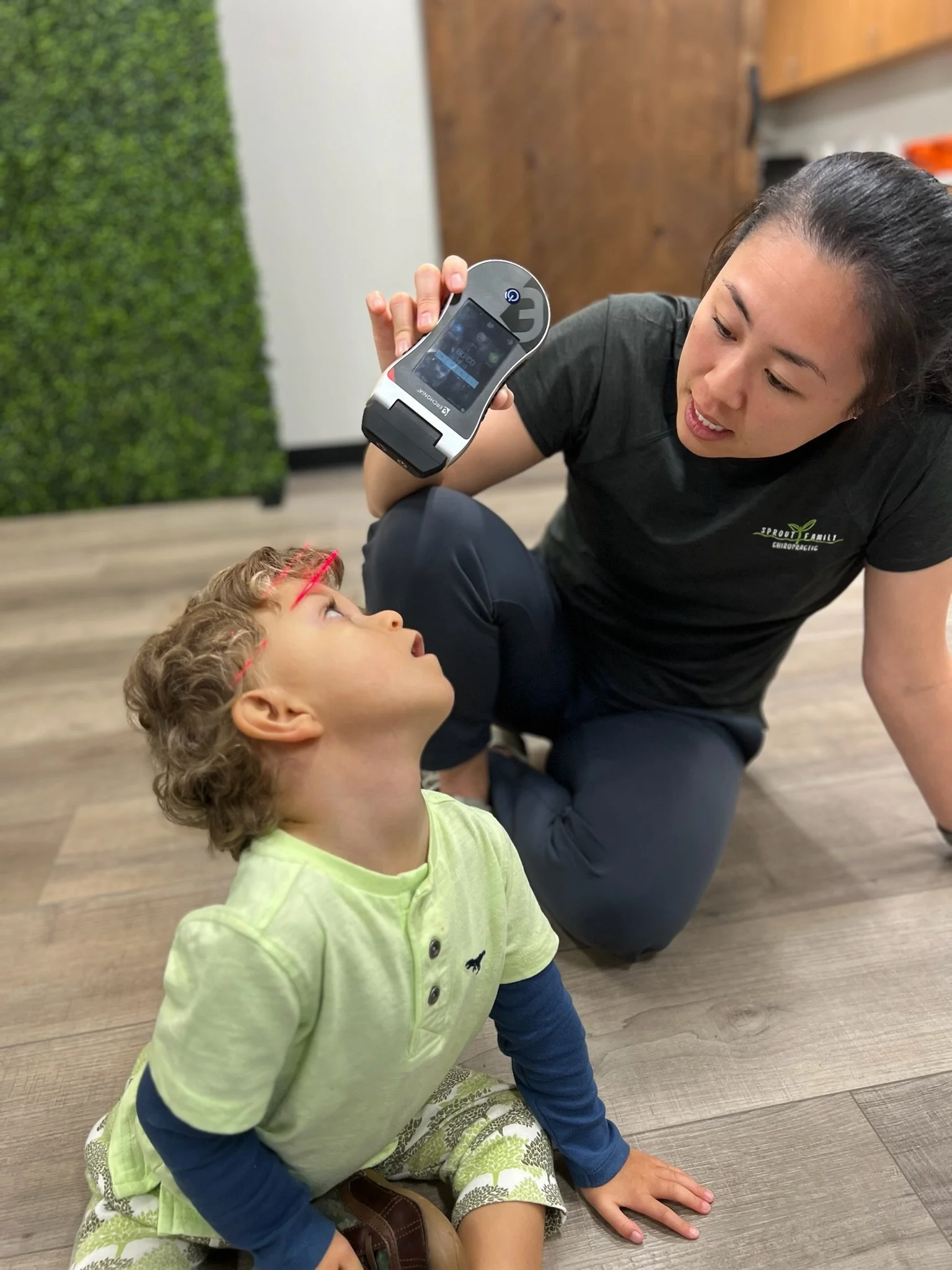
Low level laser therapy at pediatric chiropractic off in San Diego
Movement relies heavily on sensory input:
The vestibular system (balance)
Proprioception (body awareness)
Tactile input (touch and pressure)
When sensory input feels overwhelming or disorganized:
Movement may feel unsafe
Toddlers may avoid exploration
Balance may be harder to achieve
This is why motor delays often coexist with:
Sensory sensitivities
Big emotional reactions
Difficulty with transitions
Fatigue during activity
Why Parents Choose to Seek Support
Many San Diego parents seek guidance because:
Milestones feel “off,” even if pediatricians say to wait
Their child wants to move but struggles
Physical play causes frustration rather than joy
They want to support development proactively
Seeking support doesn’t mean labeling a child.
It means supporting development during a critical growth window.
How Nervous System–Focused Chiropractic Care Fits In
At Sprout Family Chiropractic in San Diego, we do not diagnose or treat developmental delays.
Our focus is the nervous system and how it supports movement and coordination.
Neurologically focused pediatric chiropractic care is designed to:
Reduce physical stress on the nervous system
Support brain–body communication
Improve postural control and adaptability
Encourage confident, coordinated movement
Care for toddlers is:
Gentle
Specific
Play-based and age-appropriate
Focused on regulation, not force
When appropriate, we use objective nervous system scans to help parents understand how their child’s system is adapting to movement demands.
The goal is not to push milestones.
The goal is to support a nervous system that allows movement to emerge naturally.
What Parents Often Notice Over Time
Every child develops differently, but parents may report:
Increased confidence with movement
Improved balance and coordination
Willingness to explore new motor skills
Less frustration during physical play
More endurance and stability
These changes reflect improved nervous system organization, not pressure to perform.
Key Takeaways for San Diego Parents
Motor milestones are directed by the nervous system
Delays are often about coordination and regulation
Sensory processing plays a major role in movement
Early support can encourage confidence and adaptability
Development thrives in regulated systems
Frequently Asked Questions About Motor Delays
When should I worry about delayed walking?
Every child develops differently. Ongoing concerns about balance, coordination, or confidence are reasonable reasons to seek guidance.
Does chiropractic care treat developmental delays?
No. Pediatric chiropractic care does not treat developmental delays. It supports nervous system regulation, which may help movement coordination.
Can chiropractic care replace physical therapy?
No. Chiropractic care complements — not replaces — pediatricians, physical therapists, and other providers.
Is care safe for toddlers?
Yes. Care is gentle, age-appropriate, and designed for developing nervous systems.
A Final Message for Parents
Your toddler isn’t lazy or behind.
Their nervous system may simply be learning how to organize movement in a way that feels safe and confident.
When we support regulation, we support the foundation for balance, coordination, and joyful movement — now and as your child grows.
If you’re a San Diego parent with questions about delayed walking or motor development and wondering whether nervous system support could help, we’re here to guide that conversation.
Scientific References & Further Reading
Adolph, K. E., & Robinson, S. R. (2015). Motor development. In Handbook of Child Psychology and Developmental Science. Wiley.
Diamond, A. (2000). Close interrelation of motor development and cognitive development and of the cerebellum and prefrontal cortex. Child Development, 71(1), 44–56.
Shumway-Cook, A., & Woollacott, M. H. (2007). Motor Control: Translating Research Into Clinical Practice. Lippincott Williams & Wilkins.
Porges, S. W. (2011). The Polyvagal Theory: Neurophysiological Foundations of Emotions, Attachment, Communication, and Self-Regulation.W.W. Norton & Company.
Proudly supporting kids with ADHD across Clairemont, Mira Mesa, Scripps Ranch, Kearny Mesa, La Jolla, and all of San Diego
Sprout Family Chiropractic | Pediatric + Nervous System Experts
Disclaimer: This article is for educational purposes and is not intended as medical advice. Always consult your child’s healthcare provider for personalized guidance.