
Trouble Latching or Feeding Difficulties in Infants | San Diego Parents Guide

If you’re a San Diego parent whose baby struggles to latch, pulls on and off the breast or bottle, becomes upset during feeds, or seems exhausted rather than calm after eating, you may have heard:
“They’ll figure it out.”
“Some babies are just picky eaters.”
“Feeding is hard in the beginning — give it time.”
And while feeding can take practice, many parents can tell when something feels off.
Feeding is meant to be one of the most regulating, comforting experiences for a newborn — so when it’s stressful for baby and parent, it’s natural to look for answers.
What Parents Mean by “Feeding Difficulties”
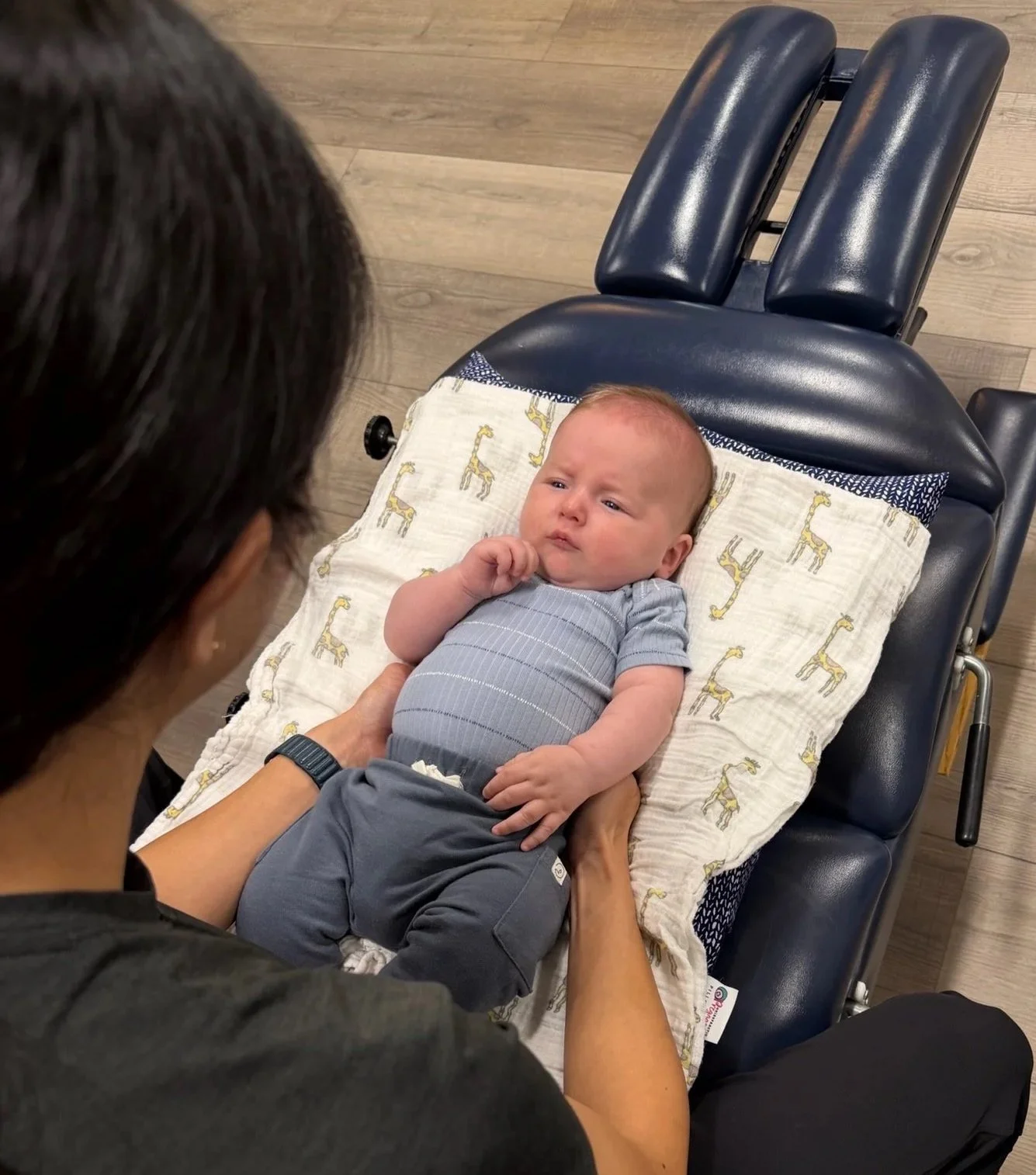
Parents often describe feeding challenges as:
Trouble latching or staying latched
Clicking sounds while feeding
Pulling away, arching, or stiffening
Fussiness or crying during feeds
Feeding taking a very long time
A baby who seems tired, frustrated, or tense while eating
These challenges can happen with:
Breastfeeding
Bottle-feeding
Or both
And they often overlap with reflux, colic, head preference, or poor settling.
Feeding Is a Nervous System Skill
Feeding isn’t just about the mouth.
It requires precise coordination between:
Sucking
Swallowing
Breathing
Head and neck movement
Postural stability
Regulation between alertness and calm
All of this is directed by the nervous system.
When regulation is smooth, feeding feels rhythmic and calming.
When regulation is difficult, feeding can feel overwhelming.
A Nervous System Perspective on Latching Challenges
From a nervous system lens, feeding difficulties may reflect:
Difficulty coordinating complex motor patterns
Heightened sensitivity to touch or position
Protective tension in the jaw, neck, or upper body
Challenges shifting into a calm, organized state
Babies who experienced:
Long or difficult labor
Assisted delivery
C-section birth
In-utero constraint
Early separation or medical interventions
…may have nervous systems working harder to adapt in the early weeks.
This doesn’t mean something is “wrong.”
It means the system may need more support to organize comfortably.
Why Feeding Difficulties Often Appear With Head Preference or Reflux
Many parents notice feeding challenges alongside:
Head preference or torticollis
Reflux or spit-up
Colic or excessive crying
Difficulty settling after feeds
These patterns often occur together because they share a common thread: nervous system regulation and coordination.
If turning the head, organizing posture, or calming the body is difficult, feeding can become stressful rather than soothing.
Why Babies May “Fight” the Feed
When feeding feels uncomfortable, babies may:
Pull away frequently
Cry or stiffen mid-feed
Refuse one side
Appear hungry but frustrated
This is not refusal or preference.
It’s often a sign that the nervous system is:
Overstimulated
Fatigued
Struggling to coordinate
Babies aren’t being difficult — they’re communicating.
Why Parents Seek Support Beyond “Practice”
Many San Diego parents look for additional support because:
Feeding feels emotionally draining
Bonding during feeds is disrupted
Weight gain or intake becomes stressful
Reassurance alone doesn’t resolve the issue
Seeking support doesn’t mean something is seriously wrong.
It means parents want feeding to feel easier and more connected.
How Nervous System–Focused Chiropractic Care Fits In
At Sprout Family Chiropractic in San Diego, we do not diagnose or treat feeding disorders.
Our focus is the nervous system and how it coordinates feeding-related movement and regulation.
Neurologically focused pediatric chiropractic care is designed to:
Reduce physical stress on the nervous system
Support clearer brain–body communication
Encourage relaxed posture and movement
Improve adaptability during feeding
Care for infants is:
Gentle
Specific
Age-appropriate
Focused on regulation, not force
When appropriate, we also use objective nervous system scans to help parents understand how their baby’s system is adapting.
The goal is not to “fix” feeding.
The goal is to support a nervous system that can coordinate, calm, and adapt more comfortably during feeds.
What Parents Often Notice Over Time
Every baby is different, but parents may report:
More relaxed feeding sessions
Less pulling on and off
Improved comfort in feeding positions
Reduced body tension
Easier settling after feeds
These changes reflect improved regulation and coordination.
Key Takeaways for San Diego Parents
Feeding is a complex nervous system skill
Latching challenges are not behavioral
Regulation affects coordination and comfort
Feeding, posture, and digestion are connected
Supporting the nervous system supports feeding ease
Frequently Asked Questions About Feeding Difficulties
Is it normal for feeding to be hard at first?
Learning takes time, but ongoing stress, tension, or distress may signal that additional support could be helpful.
Does chiropractic care fix latching problems?
No. Pediatric chiropractic care does not fix or treat feeding disorders. It supports nervous system regulation, which may improve coordination and comfort.
Is chiropractic care safe for newborns?
Yes. Care is gentle, specific, and designed for developing nervous systems. Parents are always informed and involved.
Can chiropractic care replace lactation support?
No. Chiropractic care complements — not replaces — lactation consultants, pediatricians, and other providers.
A Final Message for Parents
Feeding should feel like connection — not conflict.
When a baby struggles to latch or feed comfortably, it’s often a sign their nervous system is still learning how to organize complex tasks.
When we support regulation, we support feeding, bonding, and calm — gently and naturally.
If you’re a San Diego parent navigating feeding challenges and wondering whether nervous system support could help your baby feel more at ease, we’re here to guide that conversation.
Scientific References & Further Reading
Thayer, J. F., & Lane, R. D. (2000). A model of neurovisceral integration in emotion regulation and dysregulation. Journal of Affective Disorders, 61, 201–216.
Porges, S. W. (2011). The Polyvagal Theory: Neurophysiological Foundations of Emotions, Attachment, Communication, and Self-Regulation.W.W. Norton & Company.
McEwen, B. S. (2007). Physiology and neurobiology of stress and adaptation: Central role of the brain. Physiological Reviews, 87(3), 873–904.
Proudly supporting kids with ADHD across Clairemont, Mira Mesa, Scripps Ranch, Kearny Mesa, La Jolla, and all of San Diego
Sprout Family Chiropractic | Pediatric + Nervous System Experts
Disclaimer: This article is for educational purposes and is not intended as medical advice. Always consult your child’s healthcare provider for personalized guidance.