
Flat Head Syndrome (Plagiocephaly) | A San Diego Parent’s Guide
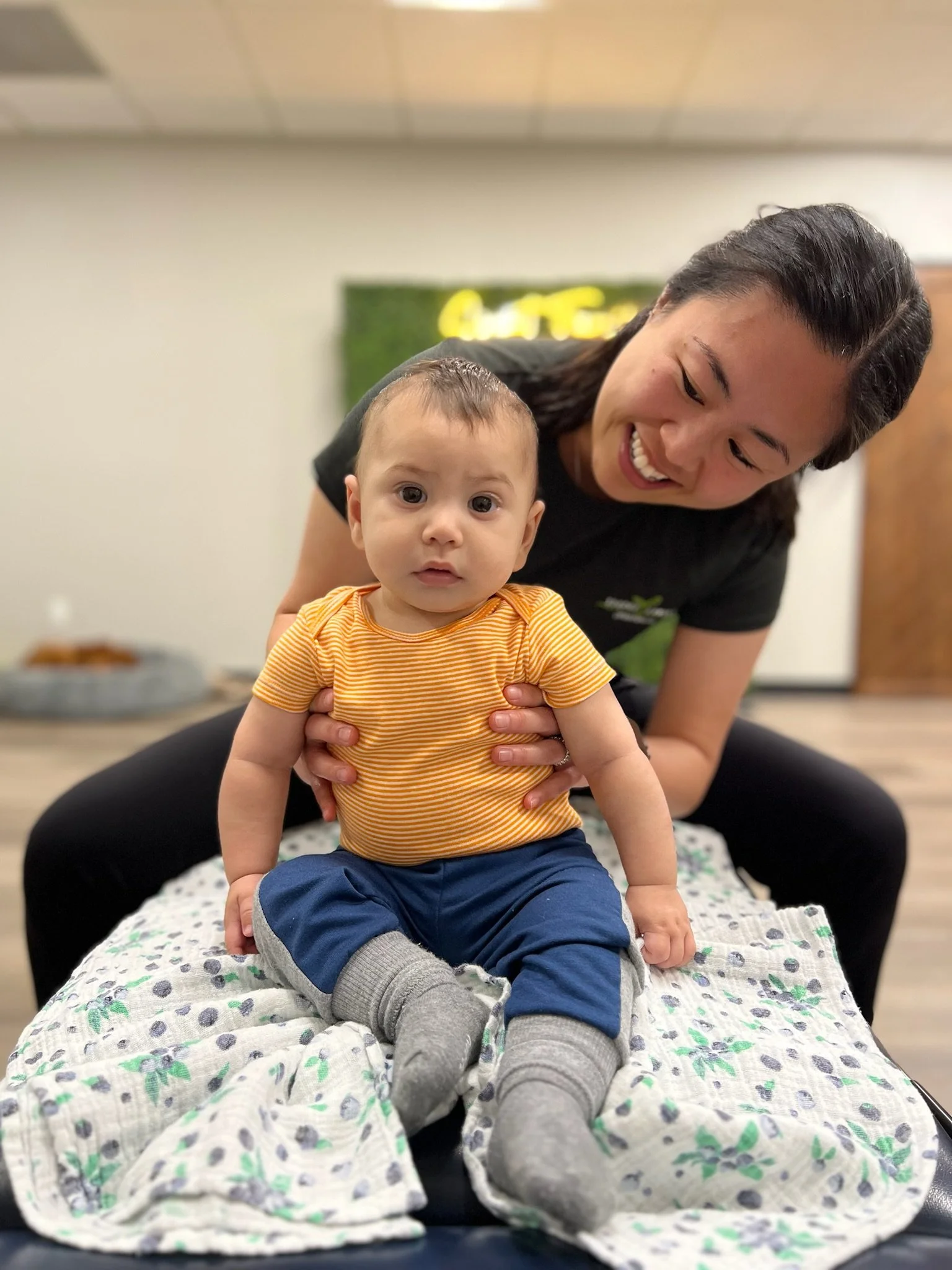
What San Diego Parents Notice — and a Nervous System Perspective
If you’re a San Diego parent noticing flattening on one side of your baby’s head, uneven head shape, or a preference for sleeping in the same position, you may have heard:
“It’s just positional.”
“It will round out on its own.”
“Make sure they do tummy time.”
While head shape changes are common in infants, many parents sense there’s more to the story — especially when flattening progresses or seems tied to tension, feeding issues, or head preference.
Understanding flat head syndrome through a nervous system and movement lens can help parents make confident, informed decisions.
What Is Flat Head Syndrome (Plagiocephaly)?
Plagiocephaly refers to asymmetrical flattening of an infant’s head, most often:
On one side of the back of the head
Sometimes accompanied by facial or ear asymmetry
Often associated with a head preference
It’s important to know:
Plagiocephaly is common
It is usually positional, not structural
It reflects how a baby moves, rests, and adapts to their environment
Head shape is influenced by movement and pressure over time.
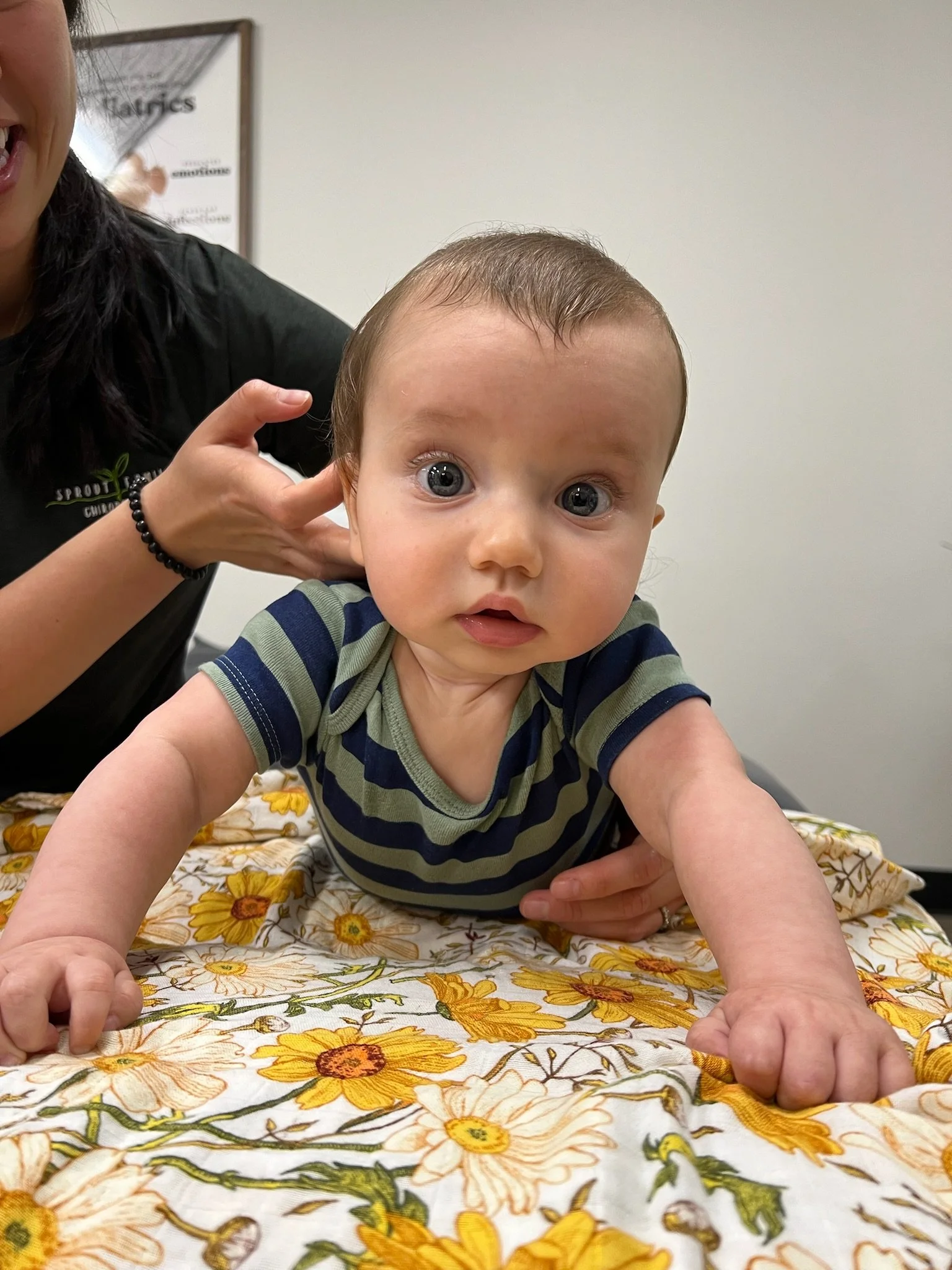
Why Flat Spots Develop in Babies
A baby’s skull is designed to be:
Soft
Flexible
Malleable
This allows for:
Birth
Rapid brain growth
Developmental changes
However, this flexibility also means head shape is affected by:
Prolonged time in one position
Limited neck mobility
Head preference
Reduced tolerance for tummy time
When a baby consistently rests in the same position, pressure builds in one area — and flattening can occur.
A Nervous System Perspective on Head Shape
Movement patterns don’t start in the muscles — they start in the nervous system.
The nervous system coordinates:
Muscle tone
Posture
Head and neck movement
Comfort in different positions
When a baby’s nervous system is under stress or adapting unevenly, you may see:
Preference for one side
Resistance to certain positions
Tension through the neck or upper body
Flat spots are often a downstream effect of these patterns — not the primary issue.
The Link Between Plagiocephaly, Torticollis, and Head Preference
Many babies with plagiocephaly also show signs of:
Head preference
Torticollis (neck tension or imbalance)
Feeding challenges on one side
Uneven tolerance for tummy time
These patterns often occur together, because they share the same underlying drivers:
Movement asymmetry
Nervous system adaptation
Comfort-based positioning
Addressing only head shape without considering movement and regulation may miss an important piece.
Why “Just More Tummy Time” Isn’t Always Enough
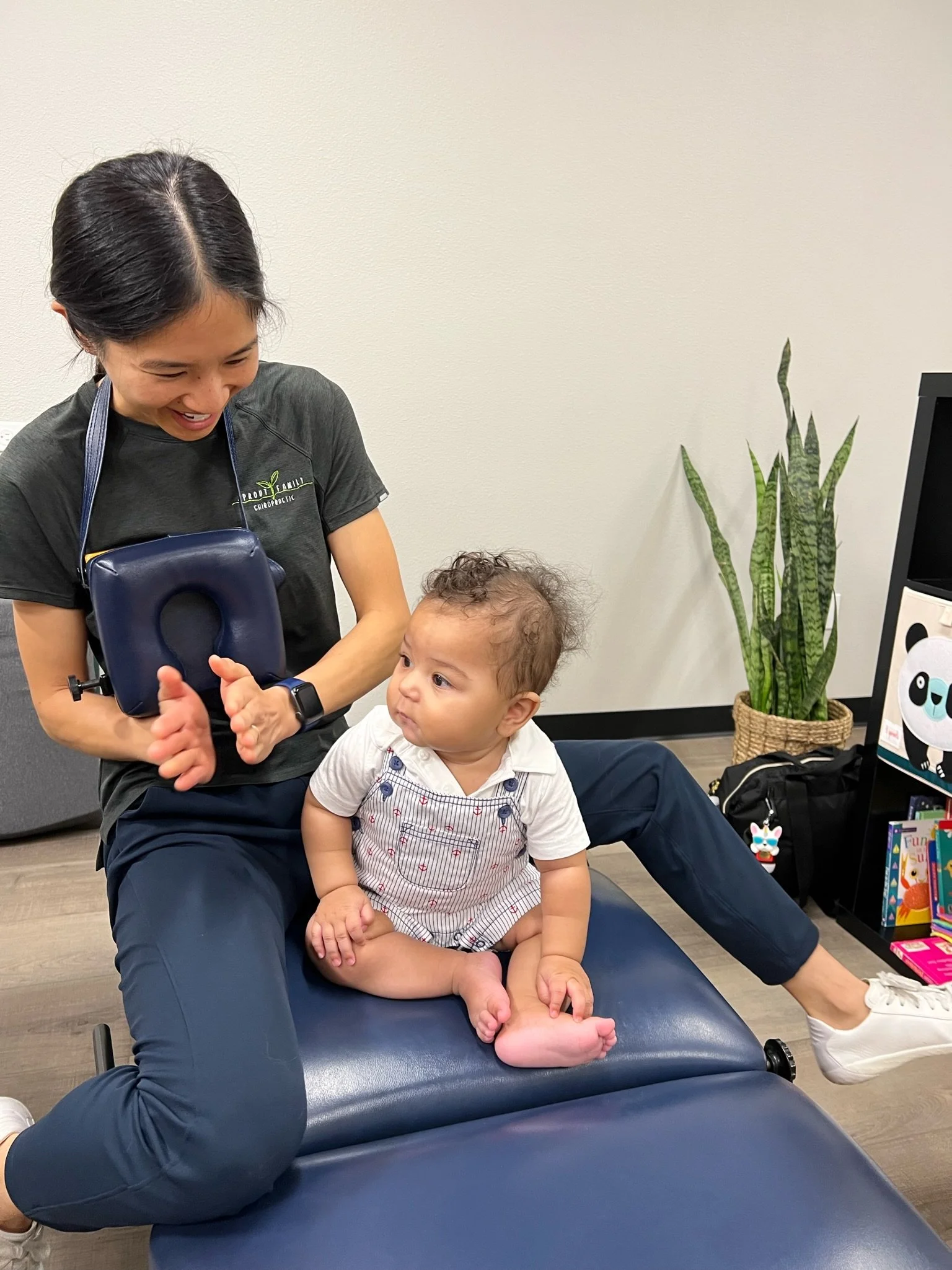
Tummy time is valuable — but if a baby:
Becomes very upset quickly
Appears stiff or tense
Avoids turning their head both directions
…it may not be a motivation issue.
It may be that their nervous system finds the position overwhelming.
Supporting regulation and comfort often helps babies:
Tolerate tummy time longer
Explore movement more evenly
Shift positions more naturally
Why Parents Choose Early Support
Many San Diego parents choose to explore additional support because:
Flattening seems to worsen
Asymmetry becomes more noticeable
Head preference persists
Feeding or sleep feels impacted
Seeking guidance early doesn’t mean panic.
It means supporting development during a period of rapid growth.
How Nervous System–Focused Chiropractic Care Fits In
At Sprout Family Chiropractic in San Diego, we do not treat or correct plagiocephaly.
Our focus is the nervous system and how it supports movement and posture.
Neurologically focused pediatric chiropractic care is designed to:
Reduce physical stress on the nervous system
Support balanced brain–body communication
Encourage symmetrical movement patterns
Improve comfort in a variety of positions
Care for infants is:
Gentle
Specific
Age-appropriate
Focused on regulation, not force
When appropriate, objective nervous system scans help parents understand how their baby’s system is adapting.
The goal is not to reshape the skull.
The goal is to support a nervous system that allows natural movement and positioning, which influences head shape over time.
What Parents Often Notice Over Time
Every baby is different, but parents may report:
More varied head positioning
Improved comfort turning both directions
Better tolerance for tummy time
Softer neck and upper body tension
Less consistent pressure on one area of the head
These changes reflect improved adaptability, not forced correction.
Key Takeaways for San Diego Parents
Flat head syndrome is common and often positional
Head shape reflects movement and positioning over time
The nervous system guides posture and comfort
Head preference and plagiocephaly often occur together
Supporting regulation supports natural development
Frequently Asked Questions About Flat Head Syndrome
Will my baby’s head round out on its own?
Many babies improve with growth and movement. Supporting balanced positioning and movement can be helpful.
Is plagiocephaly dangerous?
Positional plagiocephaly is usually not dangerous. Parents often seek guidance to support symmetry and development.
Does chiropractic care fix flat head syndrome?
No. Pediatric chiropractic care does not treat or correct head shape. It supports nervous system regulation and movement patterns.
Is infant chiropractic care safe?
Yes. Care is gentle, specific, and designed for developing nervous systems.
A Final Message for Parents
Your baby’s head shape is telling a story about how their body is adapting.
When we support the nervous system, we support comfort, movement, and the ability to explore the world more evenly — which naturally influences development over time.
If you’re a San Diego parent with questions about flat head syndrome and wondering whether nervous system support could help your baby adapt more comfortably, we’re here to guide that conversation.
Scientific References & Further Reading
Thayer, J. F., & Lane, R. D. (2000). A model of neurovisceral integration in emotion regulation and dysregulation. Journal of Affective Disorders, 61, 201–216.
Porges, S. W. (2011). The Polyvagal Theory: Neurophysiological Foundations of Emotions, Attachment, Communication, and Self-Regulation.W.W. Norton & Company.
McEwen, B. S. (2007). Physiology and neurobiology of stress and adaptation: Central role of the brain. Physiological Reviews, 87(3), 873–904.
Proudly supporting kids with ADHD across Clairemont, Mira Mesa, Scripps Ranch, Kearny Mesa, La Jolla, and all of San Diego
Sprout Family Chiropractic | Pediatric + Nervous System Experts
Disclaimer: This article is for educational purposes and is not intended as medical advice. Always consult your child’s healthcare provider for personalized guidance.