
Torticollis & Head Preference in Newborns | San Diego Pediatric Chiropractor Guide
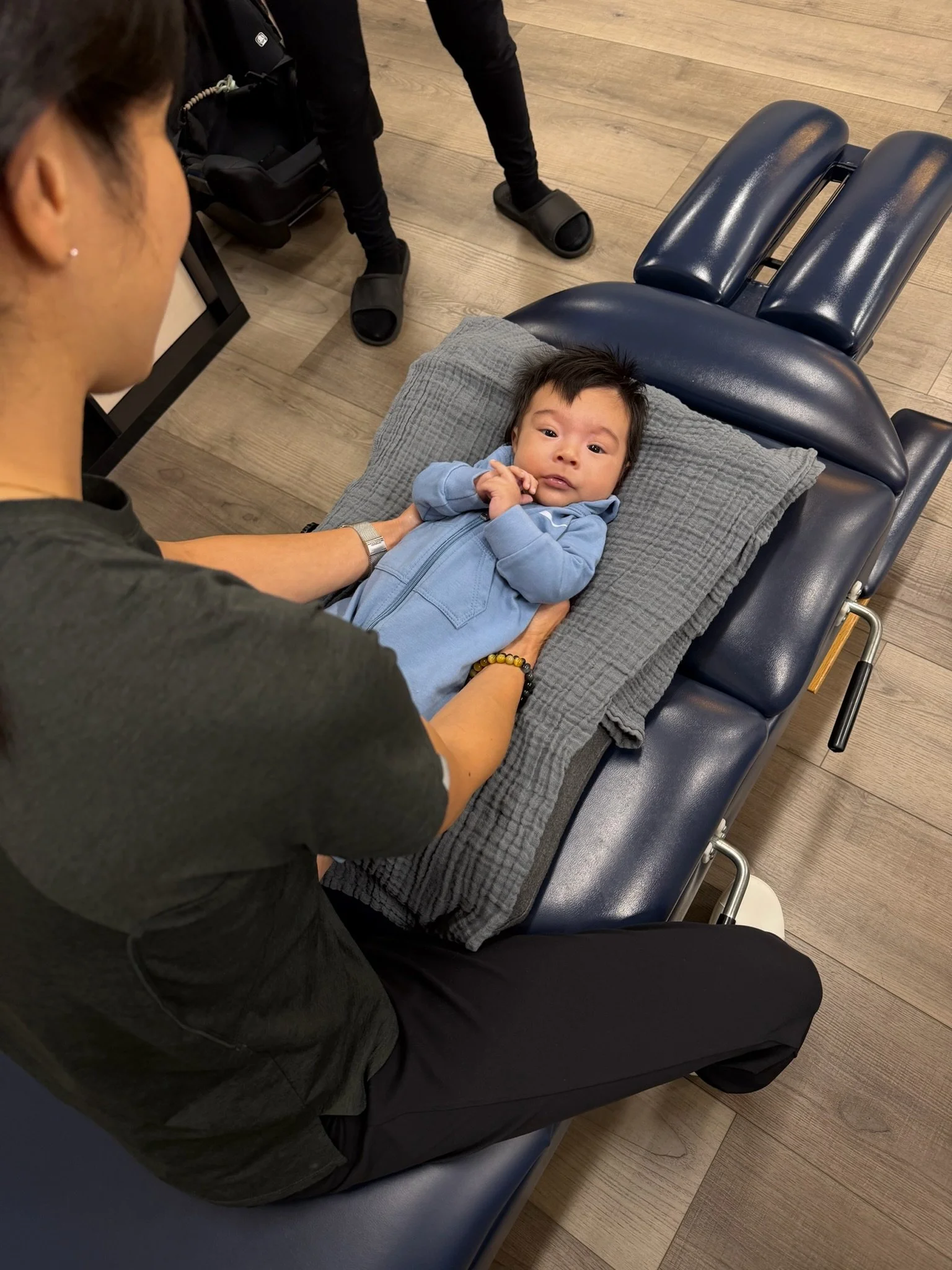
If you’re a San Diego parent noticing that your newborn always turns their head to one side, struggles to nurse on one breast, or seems uncomfortable when positioned a certain way, you may have heard terms like:
“Head preference”
“Torticollis”
“They’ll grow out of it”
While many babies do improve with time, parents often sense there’s more going on — especially when asymmetry, tension, or feeding challenges persist.
Understanding what head preference and torticollis really reflect can help parents make informed, supportive choices early on.
What Parents Mean by “Head Preference”
Head preference refers to a baby consistently:
Turning their head to one side
Sleeping with their head rotated the same way
Resisting turning the head in the opposite direction
Appearing more comfortable feeding on one side
Showing uneven head or facial shape over time
This pattern is common in newborns — but when it’s persistent, parents start asking why.
What Is Torticollis?
Torticollis describes a pattern where neck muscles are tight or imbalanced, making it difficult for a baby to comfortably move their head through a full range of motion.
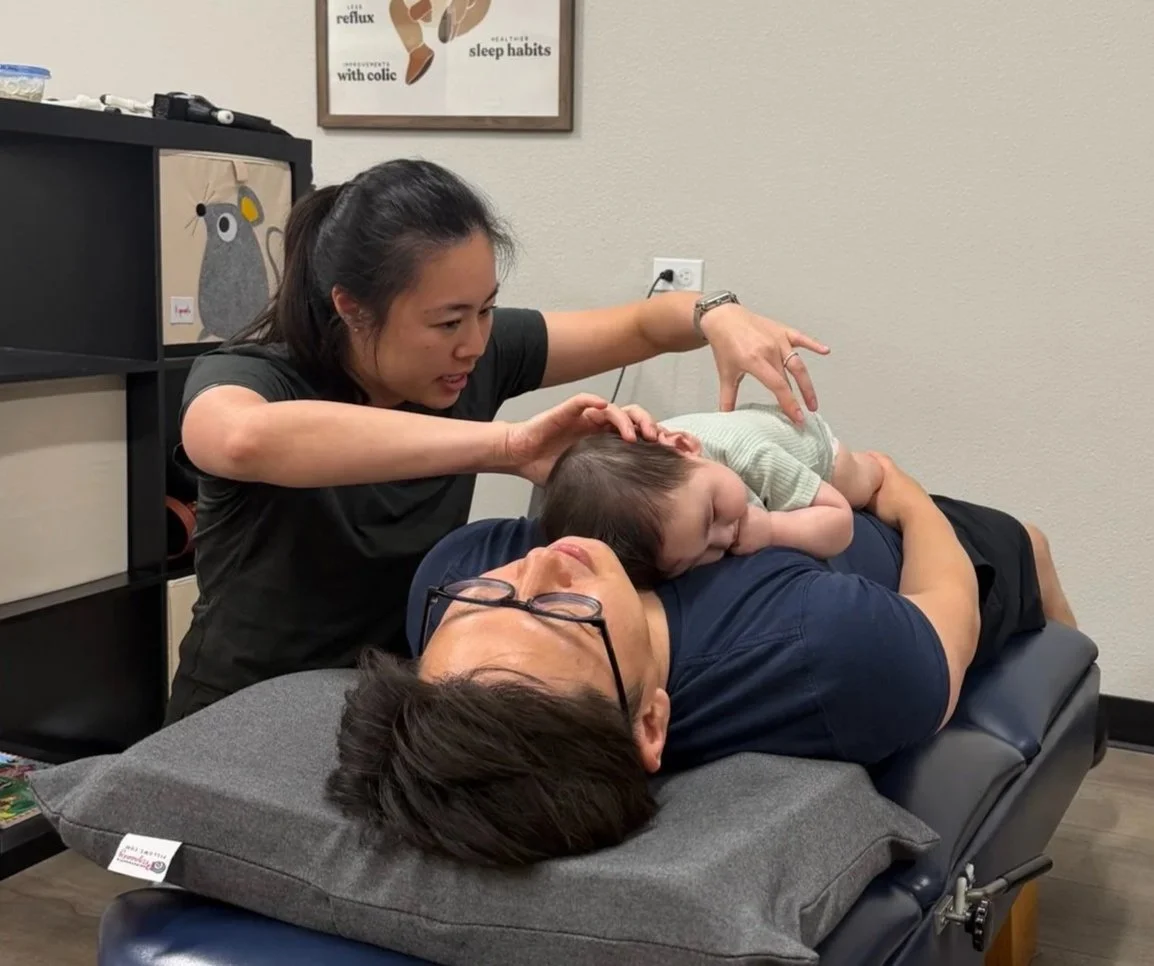
Parents may notice:
Head tilt or rotation to one side
Stiffness when changing positions
Fussiness during tummy time
Difficulty with positioning during feeding
Uneven head shape developing over time
Torticollis is a description of movement and tension, not a disease.
A Nervous System Perspective on Head Preference
Movement, muscle tone, and posture are all directed by the nervous system.
In newborns, head preference and torticollis can reflect:
How the nervous system adapted during pregnancy
How the body responded to birth forces
How sensory and motor input is being processed
Babies who experienced:
In-utero constraint
Long or difficult labor
Assisted delivery
C-section birth
Early feeding challenges
…may show patterns of protective tension in the neck and upper body.
This doesn’t mean something is “wrong.”
It means the system may be adapting unevenly.
Why Head Preference Often Shows Up With Feeding Challenges
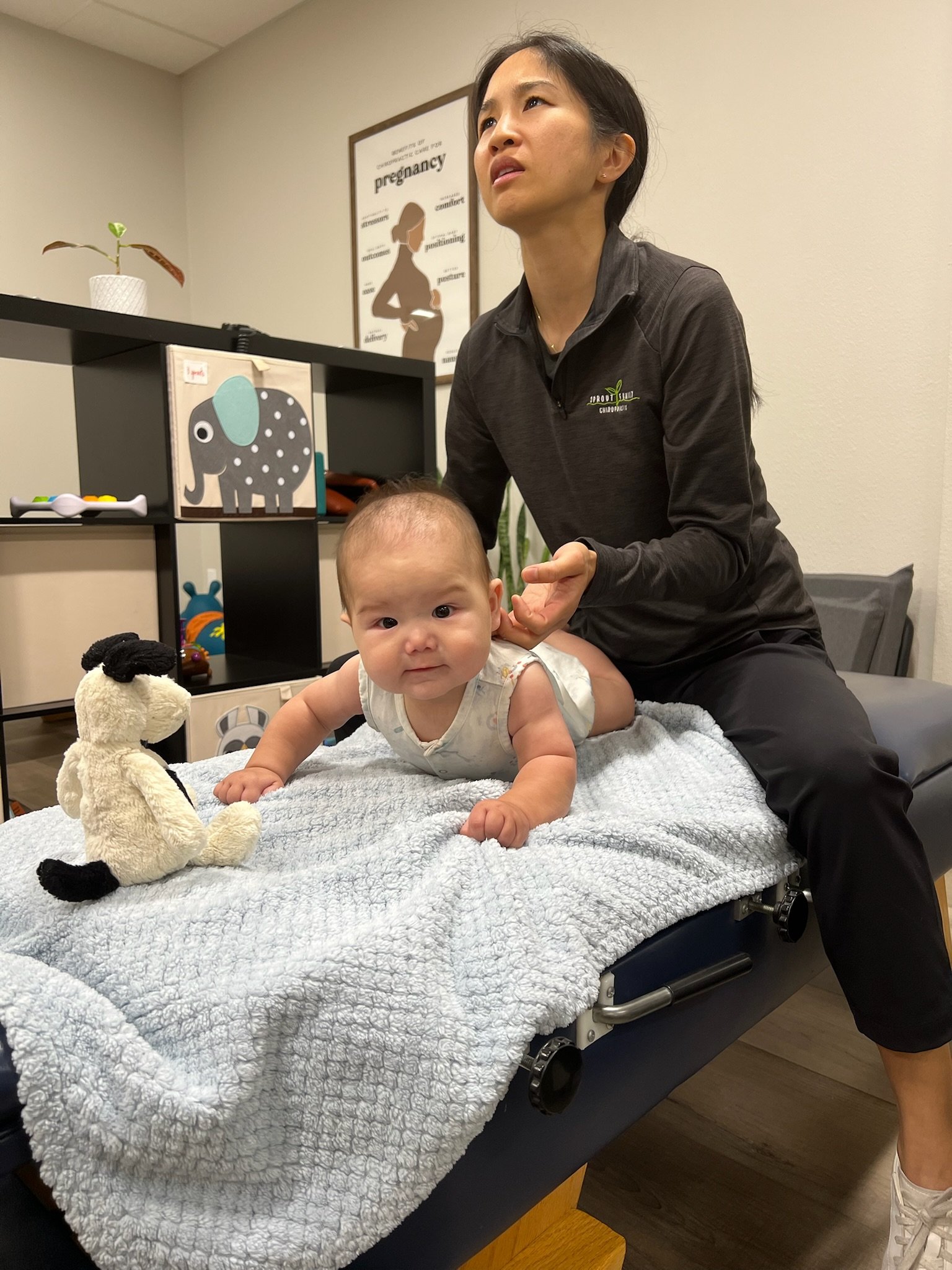
Feeding requires coordinated head, neck, and jaw movement.
When a baby has a head preference:
One feeding position may feel easier
The opposite side may feel restricted or uncomfortable
Latching may be inconsistent
Feeding may become tiring or frustrating
This is why parents often notice head preference alongside:
Reflux
Colic
Trouble latching
Fussiness during feeds
These patterns are connected, not coincidental.
Head Preference, Tummy Time, and Development
Tummy time is important — but for babies with tension:
Certain positions may feel overwhelming
Resistance isn’t defiance, it’s discomfort
Uneven movement patterns may persist
Supporting comfort and regulation helps babies explore movement more evenly, which supports head shape, strength, and coordination over time.
Why Parents Are Told to “Wait and See”
Because many babies do improve with growth.
However, parents often seek earlier support because:
Asymmetry seems to increase
Feeding challenges persist
Sleep positions remain one-sided
They want to support development proactively
Early support doesn’t mean panic.
It means awareness.
How Nervous System–Focused Chiropractic Care Fits In
At Sprout Family Chiropractic in San Diego, we do not diagnose or treat torticollis.
Our focus is the nervous system and how it coordinates movement.
Neurologically focused pediatric chiropractic care is designed to:
Reduce physical stress on the nervous system
Support brain–body communication
Encourage balanced movement and posture
Improve adaptability and comfort
Care for newborns is:
Extremely gentle
Specific and age-appropriate
Focused on regulation, not force
When appropriate, we use objective nervous system scans to help parents understand how their baby’s system is adapting.
The goal is not to “force symmetry.”
The goal is to support a nervous system that can move, turn, and adapt more evenly.
What Parents Often Notice Over Time
Every baby is different, but parents may report:
Increased comfort turning both directions
More relaxed feeding positions
Improved tolerance for tummy time
Softer body tension
More varied sleep positions
These changes reflect improved nervous system adaptability.
Key Takeaways for San Diego Parents
Head preference is common but worth understanding
Torticollis describes movement patterns, not disease
The nervous system guides posture and motion
Feeding, head shape, and movement are interconnected
Supporting regulation supports balanced development
Frequently Asked Questions
Will my baby grow out of head preference?
Many babies improve over time. Support may help the nervous system adapt more comfortably and evenly.
Is head preference harmful?
On its own, it’s not dangerous. Persistent asymmetry may influence feeding, movement, and head shape, which is why parents often seek guidance.
Does chiropractic care treat torticollis?
No. Pediatric chiropractic care does not treat torticollis. It supports nervous system regulation and movement coordination.
Is care safe for newborns?
Yes. Infant care is gentle, specific, and designed for developing nervous systems.
A Final Message for Parents
Your baby isn’t choosing one side.
Their nervous system may simply be adapting the best way it knows how.
When we support regulation and balanced communication, we support comfort, movement, and healthy development — gently and naturally.
If you’re a San Diego parent noticing head preference or tension in your newborn and wondering whether nervous system support could help, we’re here to guide that conversation.
Scientific References & Further Reading
Thayer, J. F., & Lane, R. D. (2000). A model of neurovisceral integration in emotion regulation and dysregulation. Journal of Affective Disorders, 61, 201–216.
Porges, S. W. (2011). The Polyvagal Theory: Neurophysiological Foundations of Emotions, Attachment, Communication, and Self-Regulation.W.W. Norton & Company.
McEwen, B. S. (2007). Physiology and neurobiology of stress and adaptation: Central role of the brain. Physiological Reviews, 87(3), 873–904.
Huerta, T. S., et al. (2025). Neural representation of cytokines by vagal sensory neurons. Nature Communications, 16, 3840.
Proudly supporting kids with ADHD across Clairemont, Mira Mesa, Scripps Ranch, Kearny Mesa, La Jolla, and all of San Diego
Sprout Family Chiropractic | Pediatric + Nervous System Experts
Disclaimer: This article is for educational purposes and is not intended as medical advice. Always consult your child’s healthcare provider for personalized guidance.