
ADHD isn’t just about fidgeting or having too much energy.
For parents, it’s the everyday struggle of watching your child have trouble focusing, following directions, or managing big emotions. It’s the stress of notes from teachers, the exhaustion from managing meltdowns, and the aching worry that your child is trying so hard—but still falling behind.
You may have heard there’s no known cause of ADHD. And while there’s no single factor, there are known patterns in the brain—and ways to support them naturally.
Let’s take a look at what’s really going on in a child’s brain with ADHD—and how chiropractic care supports healthier regulation.
What Are the Real Signs of ADHD in Children—And Is It More Than Just Hyperactivity?
Attention Deficit Hyperactivity Disorder (ADHD) is a common neurodevelopmental condition that affects how a child regulates attention, movement, impulse control, and emotional reactions. It’s more than just being "easily distracted."
In real life, ADHD often looks like:
Constant fidgeting or restlessness
Interrupting or difficulty waiting their turn
Trouble starting or completing tasks
Emotional outbursts or low frustration tolerance
Inconsistent academic or social behavior
These symptoms aren’t signs of laziness or defiance—they’re signs that the brain is struggling to regulate properly.
What Are the Real Signs of ADHD in Children—And Is It More Than Just Hyperactivity?
At the center of this regulation is the prefrontal cortex—the brain’s command center.
The prefrontal cortex is responsible for:
Impulse control
Planning and decision-making
Filtering distractions
Emotional regulation
Social awareness and flexibility
Think of it like an orchestra conductor. When the conductor is functioning well, the brain and body stay in rhythm. But if communication to or from the prefrontal cortex is off—or underdeveloped—the entire system can feel chaotic.
How Does the Prefrontal Cortex Affect My Child’s Focus, Emotions, and Behavior?
When the prefrontal cortex is under-connected, overwhelmed, or underactive, kids may experience:
Trouble sitting still or following through on tasks
Difficulty shifting between activities or environments
Frequent frustration or “shutdown” moments
Big emotions with little warning
Challenges understanding social cues
This neurological imbalance isn’t a discipline issue—it’s a brain-body connection issue.
Could My Child’s ADHD Symptoms Be Due to Poor Brain-Body Connection?
Many families try stimulant medications or behavioral therapy first—and for some, those tools can help. But others feel like they’re only addressing the symptoms, not the underlying regulation problems.
That’s where a drug-free, brain-based approach like chiropractic care comes in.
Can Pediatric Chiropractic Care Help Kids with ADHD Naturally?
Pediatric chiropractic care works by supporting the nervous system—which includes the spinal cord, brainstem, and all the connections to and from the brain.
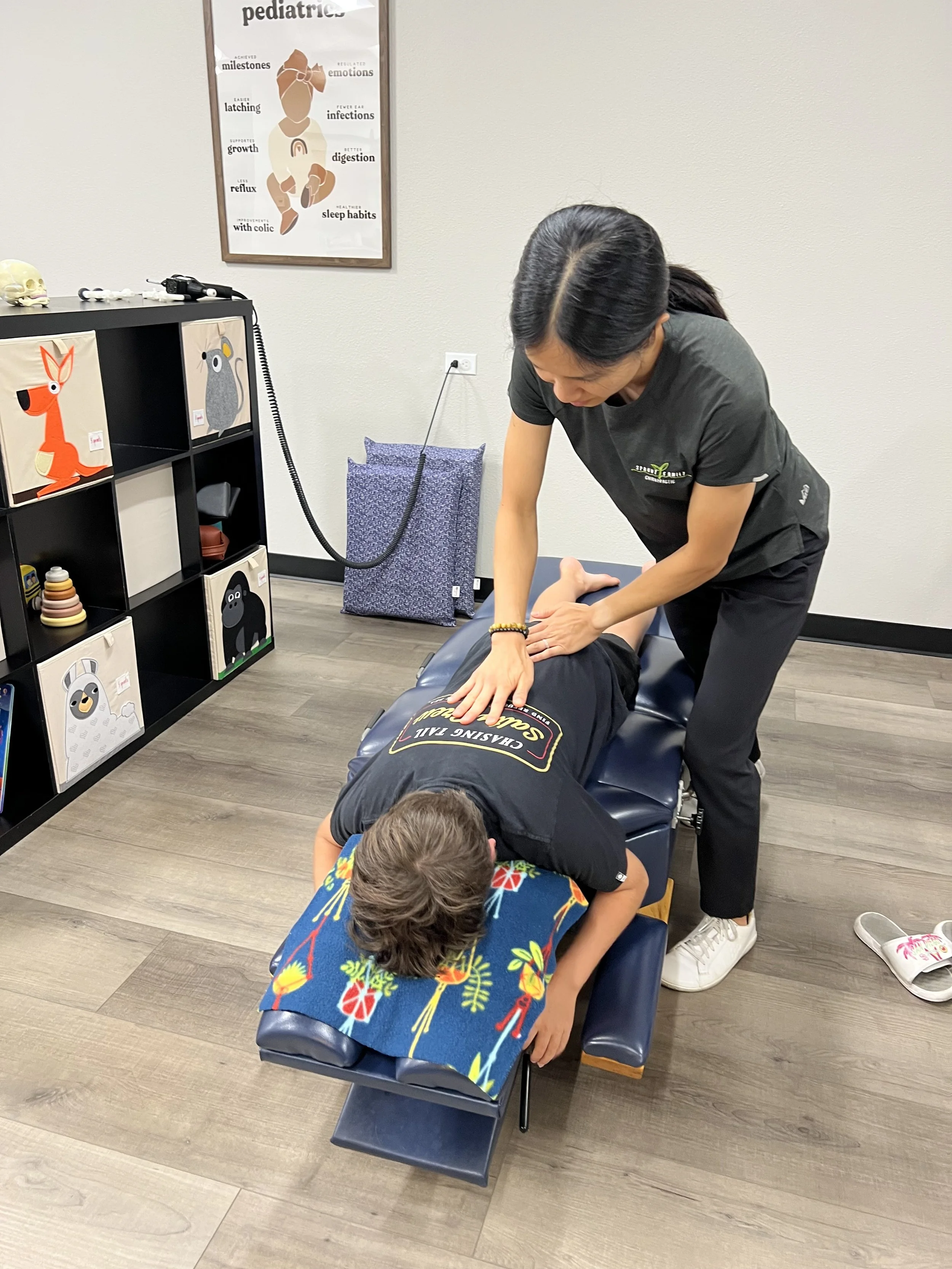
Here’s how gentle adjustments at Sprout Family Chiropractic may help children with ADHD:
Improves Brain-Body Communication
Misalignments or tension in the spine can interfere with how efficiently the brain sends and receives messages. Adjustments help clear the path.
Activates the Prefrontal Cortex
Research shows chiropractic adjustments can activate areas of the brain tied to focus, emotional control, and adaptability—especially the prefrontal cortex.
Shifts the Nervous System Out of Fight-or-Flight
Many kids with ADHD live in a state of chronic stress response. Chiropractic care helps regulate that response, allowing the brain to prioritize calm, focus, and flexibility.
What Changes Do Parents See When Their Child’s Brain Starts Regulating Better
When a child’s nervous system is calmer and their brain is more connected, parents often notice:
More patience and flexibility
Improved transitions between tasks or environments
Longer attention span
More consistent moods
Happier, more confident behavior
It’s not about changing who your child is—it’s about helping their brain and body work together the way they were designed to.
FAQ: ADHD, Brain Function & Chiropractic Care for Kids
What causes ADHD in children?
ADHD is linked to dysregulation in the brain’s prefrontal cortex, which controls attention, impulse control, and emotional regulation. It's not usually caused by just one factor—genetics, birth trauma, nervous system stress, and environmental influences may all contribute.
What does the prefrontal cortex have to do with ADHD?
The prefrontal cortex acts as the brain’s executive center. If it's underactive or poorly connected to other parts of the nervous system, it can lead to symptoms like inattention, poor impulse control, and emotional outbursts.
How does chiropractic care help with ADHD?
Pediatric chiropractic care supports the nervous system by reducing tension and improving communication between the spine, brainstem, and brain. Adjustments can help regulate the fight-or-flight response and support activation of the prefrontal cortex.
Can chiropractic replace ADHD medication?
Chiropractic isn’t a replacement for medication—but it’s a powerful complement or alternative for families seeking drug-free support. Our care focuses on improving regulation at the root by calming the nervous system and supporting brain development.
Is chiropractic care safe for kids with ADHD or sensory challenges?
Yes. At Sprout Family Chiropractic, we use gentle, age-appropriate techniques customized for each child’s sensitivity, behavior, and neurological needs. Many kids find the experience calming and empowering.
Proudly supporting kids with ADHD across Clairemont, Mira Mesa, Scripps Ranch, Kearny Mesa, La Jolla, and all of San Diego
Sprout Family Chiropractic | Pediatric + Nervous System Experts
Disclaimer: This article is for educational purposes and is not intended as medical advice. Always consult your child’s healthcare provider for personalized guidance.