

You know your child's sounds better than anyone. The hum that means happy. The squeal that means "more." The way they pull your hand toward the fridge. You've become fluent in a language no one else speaks.
And still, there are moments that hurt. When a stranger asks your child a question and waits. When you wonder if they're in pain and can't tell you. When you hear another child their age chatter at the playground, and you wonder what your child would say if they could.
If you've ever said "my child is nonverbal because they have autism," this post is for you.
The short answer
Being nonverbal doesn't mean having nothing to say. Many nonverbal autistic kids understand far more than they can express, and they communicate constantly through sounds, gestures, behavior, and devices. Supporting them starts with presuming competence and building connection. A calmer, better-regulated nervous system can also help, because a child who feels safe in their body has more room to engage, attend, and communicate in whatever way works for them.
How common is it?
You're far from alone. Researchers estimate that roughly 25 to 30 percent of autistic people have little or no functional speech. Some kids are fully nonverbal; others are "minimally verbal," using a handful of words or phrases.
This group gets less attention in research and in the media than autistic kids who talk. Many parents of nonverbal kids tell us they feel like they're on their own.
What "presuming competence" means
Presuming competence means assuming your child is capable of understanding, thinking, and learning, even when they can't show it in ways others expect.
In practice, it looks like:
• Talking to your child, not about them in front of them
• Explaining what's about to happen, even if they can't answer
• Giving them real choices and waiting for their response
• Respecting "no," in whatever form it comes
• Never assuming a lack of speech means a lack of thought
One mom of a nonverbal 6-year-old in our practice told us this was the thing that mattered most to her. She said seeing us speak to her daughter, include her, and give her time and space meant more than she could put into words.
Communication is bigger than words
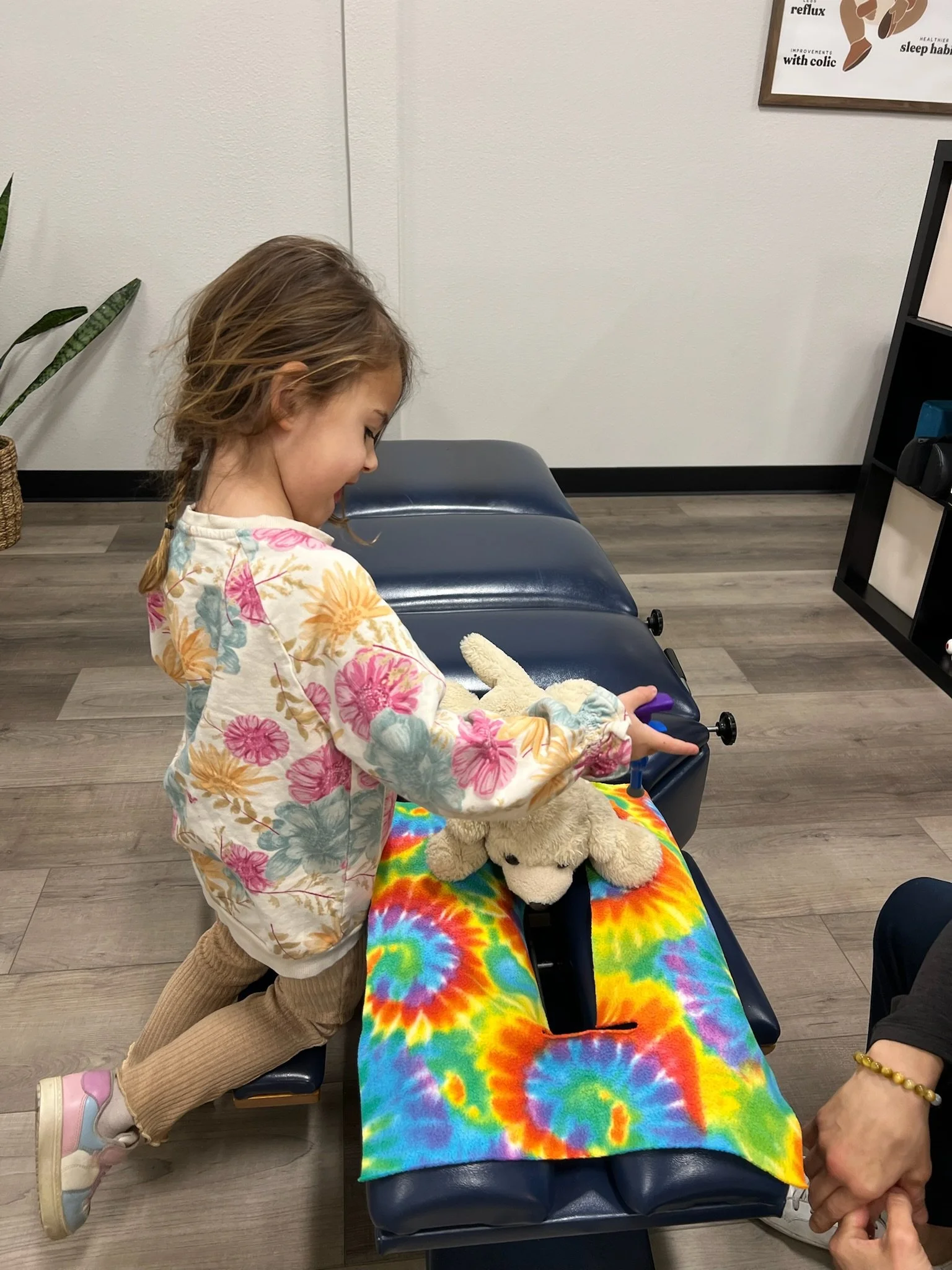
Your child is communicating all the time. It just may not sound like talking. Communication can look like:
• Leading you by the hand to what they want
• Sounds, hums, and vocal play
• Gestures, pointing, or showing you objects
• Picture cards or a speech-generating device (AAC)
• Sign language or approximations of signs
• Behavior, including meltdowns, which often say "I'm overwhelmed" or "something hurts"
That last one matters. For a nonverbal child, behavior is often the clearest message they have. A meltdown before school may be their way of saying the noise is too much, their belly hurts, or they didn't sleep. Reading behavior as communication changes how we respond to it.
A common worry: will AAC stop my child from talking?
Many parents worry that using a device or picture system will make their child less motivated to speak. Research says no. A systematic review by Schlosser and Wendt (2008) found that AAC does not hinder speech in autistic children, and may even help some kids produce more speech, though gains vary from child to child.
If your speech therapist recommends AAC, it's giving your child a voice now, not taking away their future one.
Why regulation and connection come first
Communication of any kind takes a lot. Your child has to notice someone, want to connect, organize their body, and get a message out. All of that is much harder when the nervous system is stuck in fight-or-flight.
Think about how hard it is to find your words when you're scared, overwhelmed, or in pain. Now imagine feeling that way most of the day. For many nonverbal kids, a body on high alert leaves little room for eye contact, shared attention, or play. (We explain this stress pattern in Is My Child Stuck in Fight-or-Flight?)
When the nervous system calms down, parents often notice the building blocks of communication show up more: looking at faces, sharing attention on a toy, staying in a room with family, or tolerating new people. These aren't speech, but they're the ground speech and AAC are built on.
How we care for nonverbal kids at Sprout Family Chiropractic

We do not treat or cure autism, and we never promise speech. What we do is focus on the nervous system and the everyday challenges that make it harder for your child to feel safe, connect, and engage.
1. We presume competence, every visit. We greet your child by name, tell them what we're about to do, and wait for their response, whatever form it takes.
2. We read your child's body. Facial expression, breathing, muscle tension, leaning in or pulling away. You know your child's signals best, so we ask you to teach us. If your child says "no" in any way, we stop.
3. We start with a clear picture. INSiGHT scans at the first visit show how your child's nervous system is handling stress, without your child needing to describe anything.
4. We use gentle, kid-specific techniques. Sacro-Occipital Technique (SOT), cranial work, and gentle instrument-assisted adjustments, with light touch and no cracking. We adjust kids wherever they're comfortable, including on your lap.
5. We add low-level laser therapy when it fits. We use the Erchonia XLR8 and GVL lasers to support mitochondrial health and the body's natural healing. No heat, and most kids keep playing.
6. We support your child's communication team. We see our role as helping your child's body become calm enough for speech therapy, AAC, OT, and connection at home to take hold.
What progress can look like
For nonverbal kids, progress often shows up long before words, if words come at all. Here are some of the changes families in our practice have shared:
• More eye contact and more interest in faces
• Playing with toys independently for longer
• Sitting and attending for longer stretches
• Joining the family in shared spaces, like eating in the living room instead of alone
• Calmer bodies and easier bedtimes
• Feeling safe enough to engage with new people
• For some children, new sounds or words, alongside their speech therapy
Every child is different, and these changes vary. But for parents who've been told to wait and see, these small moments are often the first signs that something is shifting.
What a care plan looks like
• Length: 3 months to start
• Frequency: 3 visits per week
• Progress exams: every 12 visits, so we can check how your child is changing and adjust the plan
The nervous system learns through repetition, and research shows repetition, intensity, and time all matter for lasting change (Kleim & Jones, 2008). That research comes mostly from rehabilitation, so we use it as a guide and adjust each plan to the child.
Frequently asked questions
Will chiropractic care help my nonverbal child talk? We can't promise that, and we'd be cautious of anyone who does. We focus on helping your child's nervous system feel calmer and safer. Many families notice more engagement, attention, and connection, which supports the work your speech therapist is doing. Some children do gain sounds or words over time, but every child is different.
How do you know if my nonverbal child is uncomfortable? We watch their body closely and ask you to teach us their signals. We go slowly, check in constantly, and stop if your child shows us "no."
My child doesn't tolerate being touched. Can you still help? Often, yes. We may spend the first visits simply building trust and letting your child get used to us. Our touch is very light, and we always go at your child's pace.
Should we keep doing speech therapy and AAC? Yes, absolutely. We see our care as support for your child's communication team, never a replacement.
Is it okay that my child can't tell you how they feel after an adjustment? Yes. Parents are usually the best reporters. We'll ask what you notice at home: sleep, mood, engagement, digestion. Progress exams every 12 visits help us track changes over time.
Your next step
Your child deserves care from people who see their potential, not just their diagnosis. If you'd like to see how we work with nonverbal kids, we'd love to meet your family.
Your Initial Visit happens in two parts:
1. Visit 1: a conversation about your child's history, a gentle chiropractic exam, and INSiGHT nervous system scans
2. Visit 2: we walk you through what we found and recommend a care plan, so you can decide what's right for your family
We're located at 8799 Balboa Ave in Kearny Mesa, San Diego. We accept HSA and FSA cards. Have questions first? Call us at (619) 786-4886.
Read More Articles Like This
Is My Child Stuck in Fight-or-Flight? 12 Signs in Autistic Kids
Is Chiropractic Safe for Kids With Autism? What a Gentle Adjustment Really Looks Like
Can Light Therapy Help Kids with Autism?
Sources
• Kleim & Jones, 2008, J Speech Lang Hear Res: principles of experience-dependent neural plasticity
Proudly supporting kids with Autism across Clairemont, Mira Mesa, Scripps Ranch, Kearny Mesa, La Jolla, and all of San Diego
Sprout Family Chiropractic | Pediatric + Nervous System Experts
Disclaimer: This article is for educational purposes and is not intended as medical advice. Always consult your child’s healthcare provider for personalized guidance.