
You can see it in their shoulders. Your child is up around their ears before the day has even started. A sock seam sends them into a meltdown. The garbage truck outside the window stops them cold. Bedtime takes two hours, and once they're finally asleep, they wake at 2 a.m. wide-eyed and ready to go.
You've heard the phrase "fight-or-flight" before. But you may not have realized it could describe your child's whole day, not just a scary moment.
The short answer
Fight-or-flight is the body's built-in alarm system. In many autistic kids, research shows the nervous system spends more time on the alarm side and less time in "rest and digest." When that happens, it shows up everywhere: meltdowns, sleep, digestion, focus, and how safe your child feels in their own body. Recognizing the signs is the first step. Helping the nervous system find its way back to calm is the second.
What fight-or-flight actually is
Your child's autonomic nervous system runs everything they don't have to think about, like heartbeat, breathing, digestion, and sleep. It has two main modes:
• Fight-or-flight (sympathetic): the body senses a threat and gets ready to act. Heart rate rises, muscles tense, digestion slows, and the brain scans for danger.
• Rest-and-digest (parasympathetic): the body feels safe. Heart rate slows, digestion and sleep get priority, and the brain has room for learning and connection. The vagus nerve carries much of this "all clear" signal.
A healthy nervous system moves between these two all day long. The problem comes when it gets stuck on alarm.
What research shows in autistic kids
Researchers can measure this balance through heart rate variability (HRV), small beat-to-beat changes in heart rate. Higher HRV generally reflects a stronger rest-and-digest response.
A 2021 study of autistic boys ages 7 to 15 found lower HRV and faster resting heart rates than in matched peers, which the authors read as reduced parasympathetic activity. The authors also cite a 2020 meta-analysis (Cheng et al.) that found similar patterns across many studies.
Anxiety is common too. A 2011 meta-analysis found that about 40% of autistic children and teens had at least one anxiety disorder.
Put simply: many autistic kids are living with an alarm system that's turned up and a calming system that isn't getting through as well.
12 signs your child may be stuck in fight-or-flight
Every child has hard moments. What matters is the pattern: how often these show up, and whether they've become your child's normal. Count how many feel familiar.
In the body
1. Shoulders up, muscles tight. A clenched jaw, teeth grinding, fists, or a body that never seems to relax, even while watching a favorite show.
2. Always on guard. Your child startles at small sounds, scans the room, or freezes when something unexpected happens.
3. Constant motion or trouble settling. The body is revved up and can't find "off." Focus suffers because the brain is busy watching for danger.
In behavior and emotions
4. Meltdowns over small things. A broken cracker or the wrong cup sends them over the edge, because the alarm was already close to going off.
5. Transitions feel impossible. Leaving the park, turning off the iPad, or getting in the car becomes a battle every time.
6. Sensory overwhelm. Covering ears, refusing certain clothes, or falling apart in busy stores. A stressed nervous system turns the volume up on everything.
7. A strong need for sameness. Same route, same plate, same order. Predictability is how a child on high alert tries to feel safe.
8. Falling apart after school. Your child holds it together all day and comes undone the moment they're home. Many parents call this after-school restraint collapse.
In sleep
9. Bedtime takes forever. A body on alert doesn't feel safe enough to let go into sleep.
10. Night waking or very early rising. Waking at 2 a.m. or starting the day at 4:30, wide awake.
In the gut
11. Constipation or tummy troubles. Fight-or-flight slows digestion. We cover this in depth in Why Is My Autistic Child Always Constipated? [link to Post 1]
12. Very limited eating. A small list of safe foods, gagging on new textures, or wanting to eat alone. Appetite and openness to new foods both drop when the body is on alert.
If several of these feel familiar, your child's nervous system may be spending more time on alarm than it should. That's not a diagnosis, and many of these signs can have other causes too, so share what you're seeing with your child's pediatrician. But it's a strong clue about where to look.
Why the alarm gets stuck
Fight-or-flight is supposed to switch on, do its job, and switch off. In many autistic kids, a few things keep it running:
• Sensory load. When everyday sounds, lights, and textures feel intense, the alarm gets tripped over and over all day.
• A loop between body and brain. Stress slows digestion and disrupts sleep. Then constipation and exhaustion make the body feel even less safe, which keeps the alarm on. Each problem feeds the next.
• Muted body signals. Many autistic kids have differences in interoception, the sense of what's happening inside the body. A child who can't clearly feel hunger, a full belly, or tiredness may only notice when they're already overwhelmed.
• Practice. The nervous system gets good at what it does often. A body that has spent years on high alert has, in a sense, practiced being there.
That last point is also the hopeful one. If the nervous system learns through repetition, it can practice calm too.
What families usually try first
• Calming corners, visual schedules, and transition warnings
• Deep breathing and "calm down" strategies (which are hard to use in the middle of a meltdown)
• OT, ABA, speech, and play therapy
• Anxiety medication
• Supplements, diet changes, and functional medicine
All of these can help, and we encourage families to keep going with them. Any medication decisions belong to you and your child's doctor.
What many parents tell us is that these strategies help in the moment but don't change the baseline. Their child still starts each day close to the edge.
How we approach fight-or-flight at Sprout Family Chiropractic
We do not treat or cure autism. We focus on the nervous system and the everyday challenges that come with it, and a body stuck in fight-or-flight sits underneath many of them.
1. We measure it. INSiGHT scans at your child's first visit show how their nervous system is handling stress. That gives us an objective starting point instead of a guess.
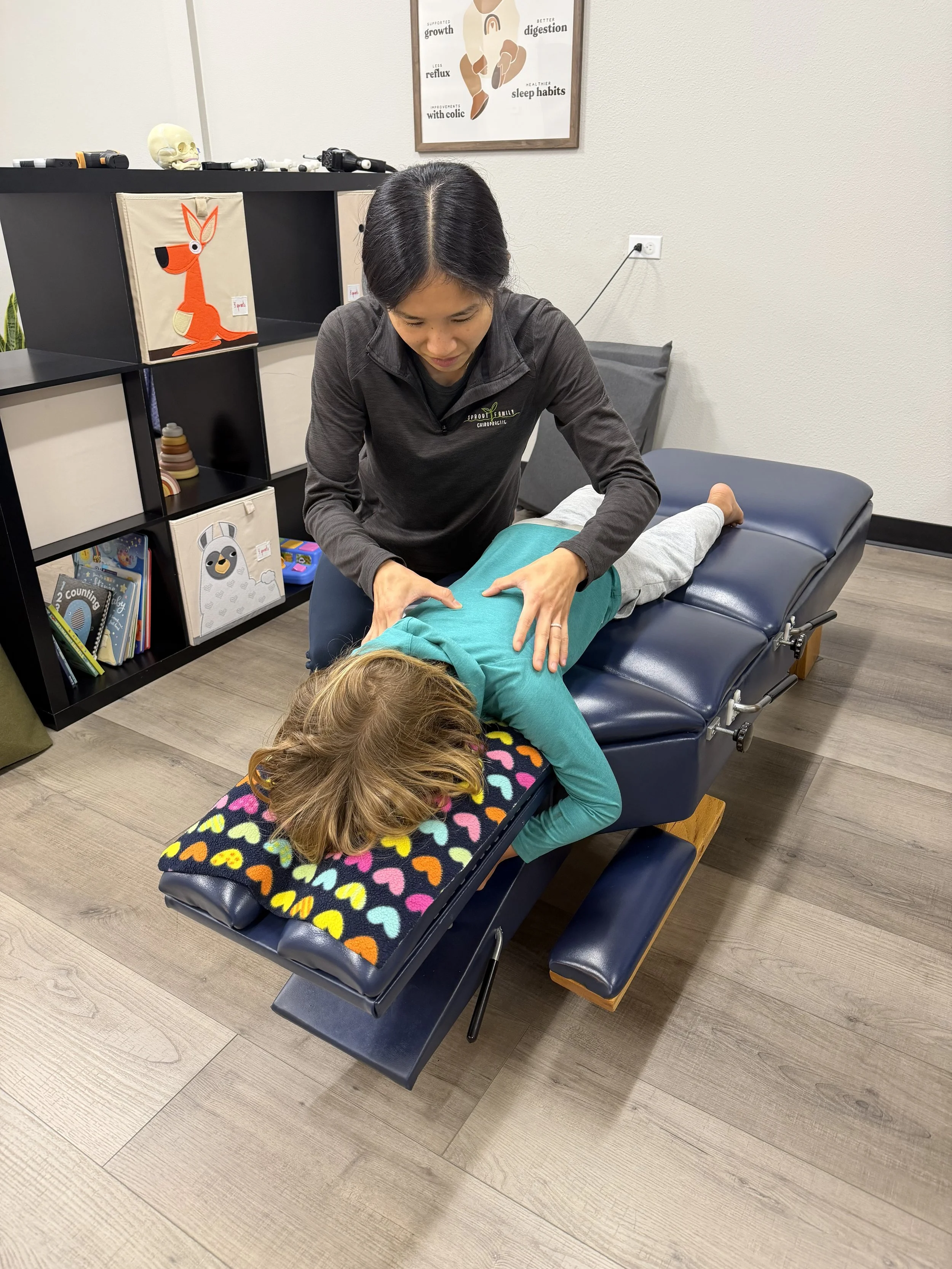
2. We use gentle, kid-specific techniques. We're trained through the ICPA and PX Docs and use Sacro-Occipital Technique (SOT), cranial work, and gentle instrument-assisted adjustments. These light-touch methods are designed to help the body shift out of a stress pattern. No twisting or cracking.
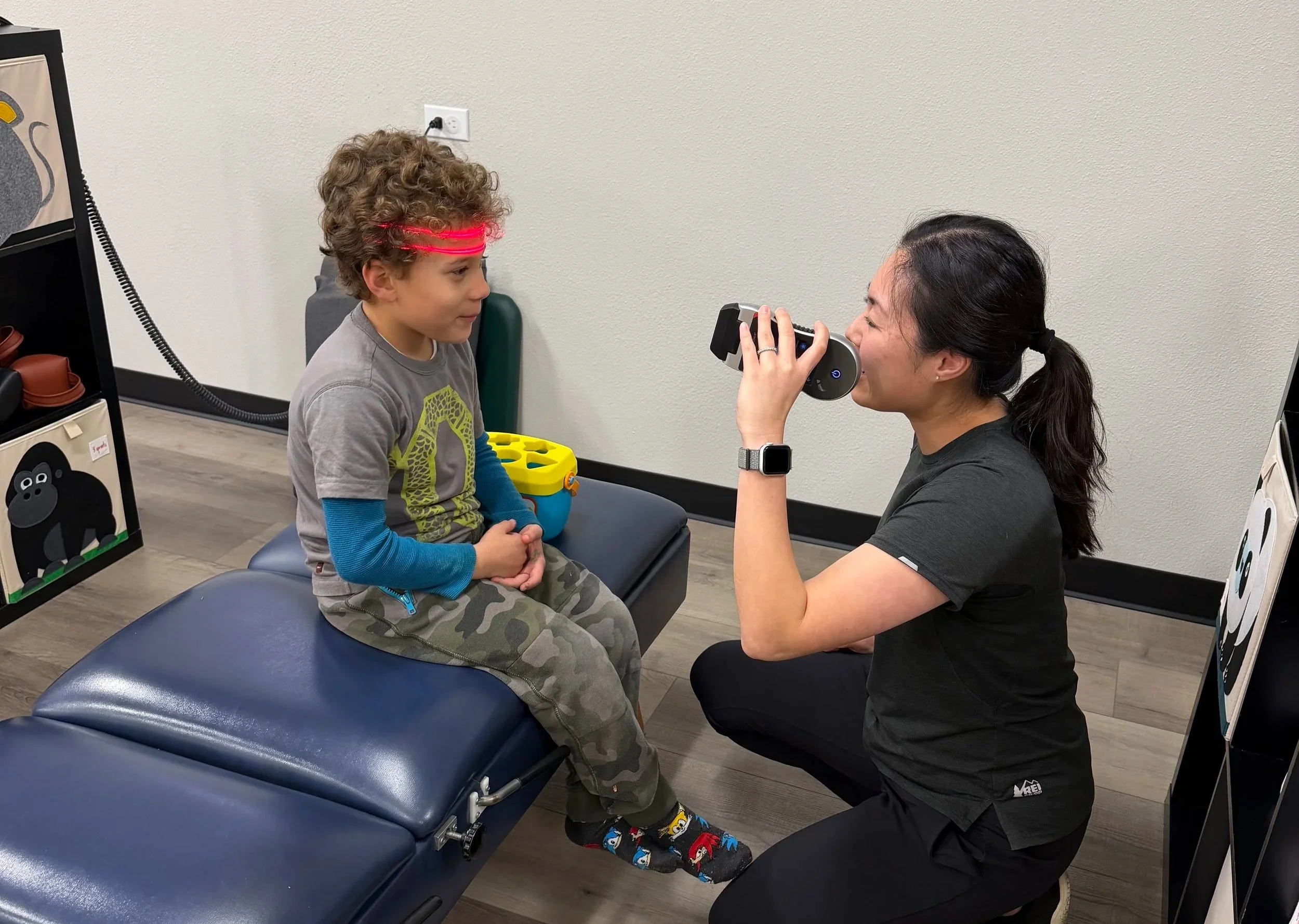
3. We add low-level laser therapy when it fits. We use the Erchonia XLR8 and GVL lasers to support mitochondrial health and the body's natural healing. No heat, and most kids play right through it.
4. We make every visit feel safe. A child stuck in fight-or-flight needs to feel safe before anything else can happen. We never rush or force, we talk to your child directly, and we let them warm up at their own pace.
5. We support your child's whole team. A calmer baseline gives therapy, school, and home strategies more room to work.
What a care plan looks like
• Length: 3 months to start
• Frequency: 3 visits per week
• Progress exams: every 12 visits, so we can check how your child is changing and adjust the plan
Why so often? The nervous system learns through repetition, and research on how the brain rewires itself shows repetition, intensity, and time all matter (Kleim & Jones, 2008). A body that has practiced alarm for years needs frequent, consistent chances to practice calm. That research comes mostly from rehabilitation, so we use it as a guide and adjust each plan to the child.
One family's story
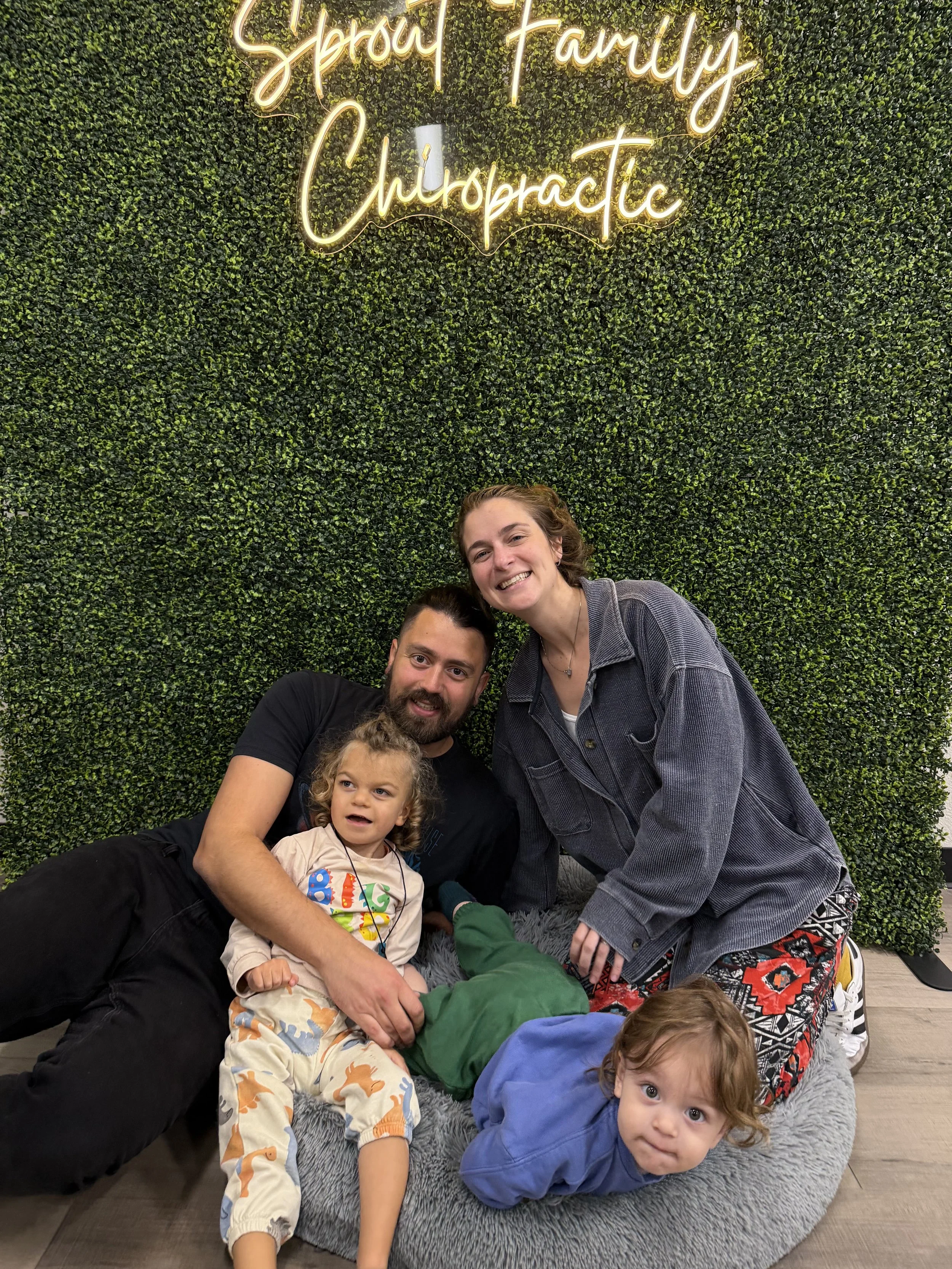
One family came to us with a son who had never slept longer than three hours at a time. Ever. Like many parents of kids stuck on high alert, they were running on empty.
After starting care, they saw a big change in his sleep. Over time they also noticed improvements in his behavior, his digestion, and how he showed up in his therapy sessions. For a family that had been surviving on broken sleep for years, that changed everything.
Every child is different, and results vary. We share stories like this with families' permission to show what progress can look like.
Frequently asked questions
Can a child really be in fight-or-flight all day? Yes. Fight-or-flight isn't only for emergencies. A nervous system can settle into a pattern where the alarm runs in the background most of the day, which is what many of the signs above reflect.
Is fight-or-flight the same as anxiety? They overlap but aren't the same. Anxiety is a diagnosis that involves thoughts and feelings. Fight-or-flight is a body state. A child can be stuck in fight-or-flight without being able to tell you they feel worried, especially if they're young or nonverbal.
Can chiropractic care help my child get out of fight-or-flight? We don't treat autism or anxiety. We focus on the nervous system, and our goal is to help your child's body spend more time in rest-and-digest. Many families notice calmer moods, better sleep, and easier digestion, but every child responds differently.
How do you know if my child's nervous system is stuck? Along with your child's history and a gentle exam, our INSiGHT scans give an objective look at how your child's nervous system is handling stress. We review the results with you at the second part of your Initial Visit.
Is it safe for a child who's already anxious? Yes. Our techniques are very gentle, and we go at your child's pace. Anxious kids often need a few visits to warm up, and that's completely fine with us.
Your next step
If you're tired of watching your child live on the edge, we'd love to help you understand what's happening in their nervous system and what to do about it.
Your Initial Visit happens in two parts:
1. Visit 1: a conversation about your child's history, a gentle chiropractic exam, and INSiGHT nervous system scans
2. Visit 2: we walk you through what we found and recommend a care plan, so you can decide what's right for your family
We're located at 8799 Balboa Ave in Kearny Mesa, San Diego. We accept HSA and FSA cards.
Read more articles like this
Why Stress Hits Neurodivergent Kids Differently
The Vagus Nerve and Your Child's Brain
Why Is My Autistic Child Always Constipated? A Nervous System Guide for San Diego Parents
Autism and ADHD Together: Why Focus Is So Hard (and What Helps)
Sensory Seeking in Autistic Kids: Why They Crash, Spin, and Never Stop Moving
Sources
Kleim & Jones, 2008,J Speech Lang Hear Res: principles of experience-dependent neural plasticity
Proudly supporting kids with Autism across Clairemont, Mira Mesa, Scripps Ranch, Kearny Mesa, La Jolla, and all of San Diego
Sprout Family Chiropractic | Pediatric + Nervous System Experts
Disclaimer: This article is for educational purposes and is not intended as medical advice. Always consult your child’s healthcare provider for personalized guidance.