
You set out the puzzle, the crayons, the favorite toy. Thirty seconds later your child is across the room, climbing the couch, then spinning, then back at the table for one second before they're off again. Or the opposite: they've drifted somewhere far away, and no amount of calling their name brings them back.
The teacher mentions it at pickup. The OT notes it in session. Someone suggests an ADHD evaluation, or your child already has both diagnoses, and you're left wondering: is this autism, is this ADHD, and why does nothing seem to help them settle?
If you've ever said "my kid has autism and ADHD and just can't focus," you are in very good company. It's one of the most common things we hear from parents at Sprout.
The short answer
Autism and ADHD show up together often, and in both, attention is closely tied to how calm or alert the nervous system is. A child whose body is stuck on high alert, or one whose system is under-aroused and searching for input, will struggle to focus no matter how hard they try. Helping the nervous system find a calmer middle ground is often what makes focus possible, alongside the therapies and medical care your child already has.
How common is it to have autism and ADHD together?
Very common. A 2021 meta-analysis of 56 studies estimated that about 4 in 10 autistic people also have ADHD. In a large U.S. survey of autistic teens, nearly half of autistic boys and more than half of autistic girls also had an ADHD diagnosis.
So if your child has both, you're not dealing with a rare combination. You're dealing with one of the most common profiles we see.
Why focus is so hard: the nervous system piece

Focus isn't just about willpower or behavior. It depends on the nervous system being in the right state to pay attention.
Think of it like a dial. Attention works best in a calm-but-alert middle zone. When the dial is turned too high, the body is in fight-or-flight: scanning the room, jumping at sounds, unable to settle. When it's turned too low, the child feels foggy and under-stimulated, so their body goes looking for input by spinning, crashing, chewing, or climbing. Both look like "can't focus." They just come from opposite ends of the dial.
Research backs this up. A 2022 study of 106 children and teens measured heart rate variability, a window into the autonomic nervous system. Autistic children tended to be over-aroused during a demanding task, while children with ADHD tended to be under-aroused at rest. Children with the over-aroused pattern, whatever their diagnosis, had more anxiety and more difficulty with daily functioning.
In our practice, kids with both autism and ADHD often swing between the two ends, sometimes in the same afternoon. That's why the same child can melt down at a loud birthday party and then be bouncing off the walls an hour later.
Other things that pull focus away
Several everyday stressors keep the dial from settling:
• Sensory load. A brain that has to work hard to filter out humming lights, scratchy tags, and background noise has less left over for the task in front of it.
• Poor sleep. A 2022 study of primary-school-aged children found autistic kids slept less and took longer to fall asleep than recommended, and that sleep affected attention. A tired nervous system is a dysregulated one.
• Gut discomfort. Constipation is very common in autistic kids, and an uncomfortable belly is a constant distraction, especially for a child who can't name what they feel. We wrote about this in Why Is My Autistic Child Always Constipated?
• Stress that adds up. Transitions, demands, and social situations all nudge the dial toward high alert. By the end of a school day, many kids have nothing left.
What families usually try first
By the time families reach us, most have already tried several of these:
• ABA, OT, and speech therapy
• ADHD medication
• Fidgets, wiggle seats, weighted vests, and visual schedules
• Diet changes and supplements
• Functional medicine
Many of these help, and we encourage them. ADHD medication works well for many children, and that decision belongs to you and your child's doctor. We never suggest stopping a medication.
What parents often tell us is that progress feels fragile. A good week in therapy is followed by a rough one. The strategies work at the clinic but fall apart at home. That's often a sign the nervous system underneath is still swinging between high alert and shut down, so new skills don't have steady ground to land on.
How we support focus at Sprout Family Chiropractic
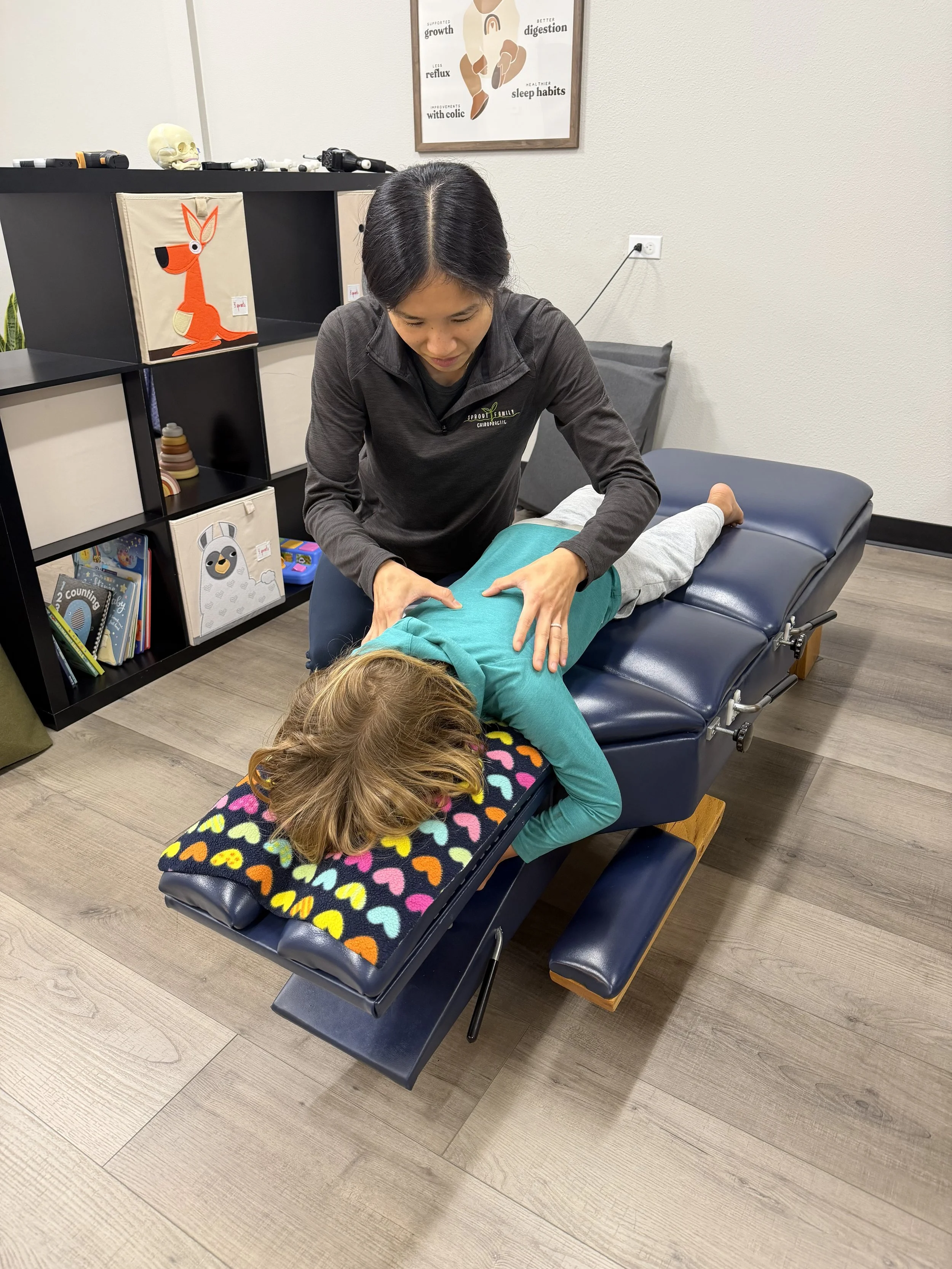
We do not treat or cure autism or ADHD. We focus on the nervous system and the everyday challenges that make it harder for your child to learn, play, and connect, and focus is one of the biggest.
1. We start with a clear picture. At your child's first visit, INSiGHT scans show how their nervous system is handling stress. Along with your child's history and a gentle exam, that tells us where to start and gives us a baseline to measure against.
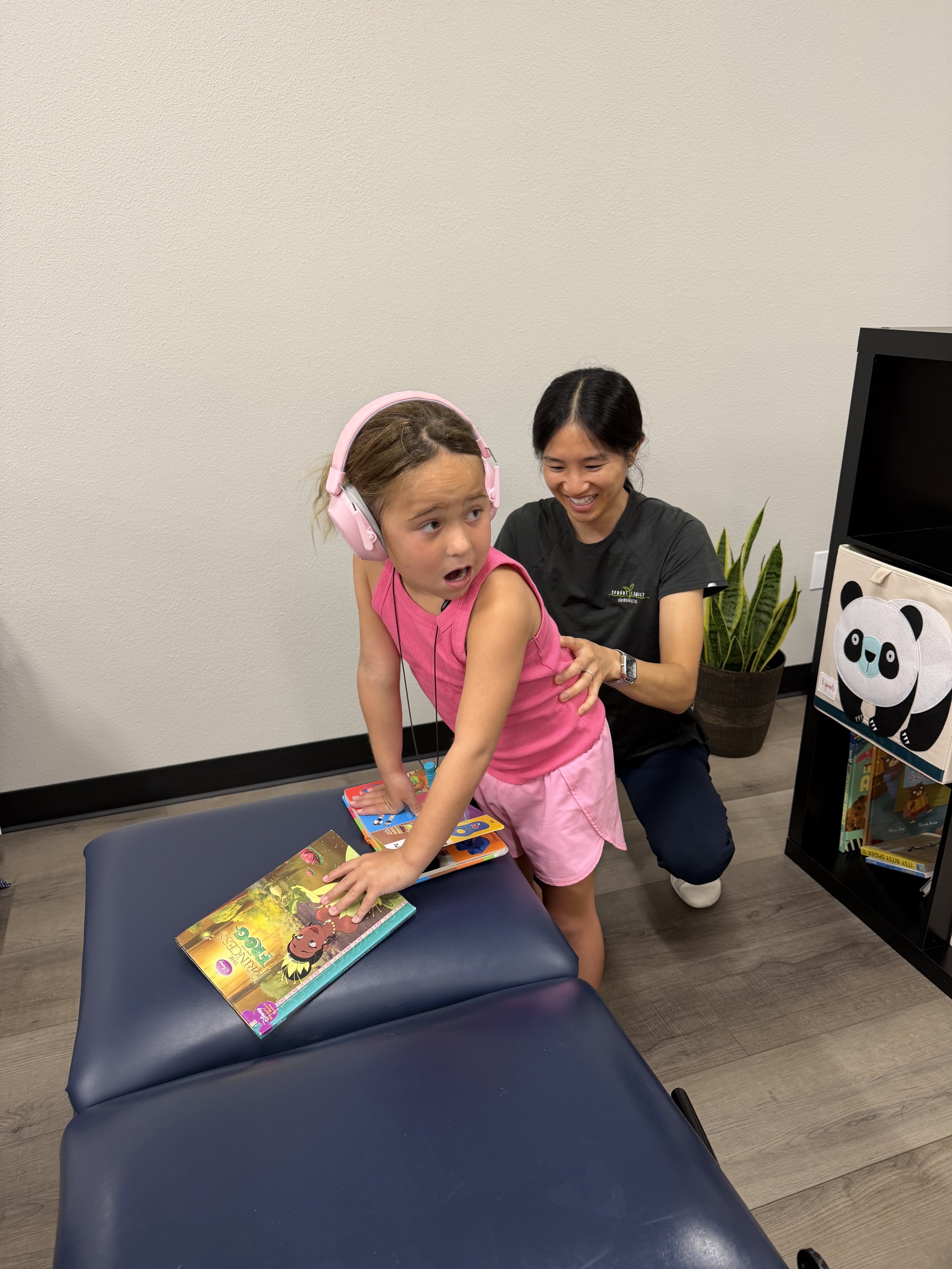
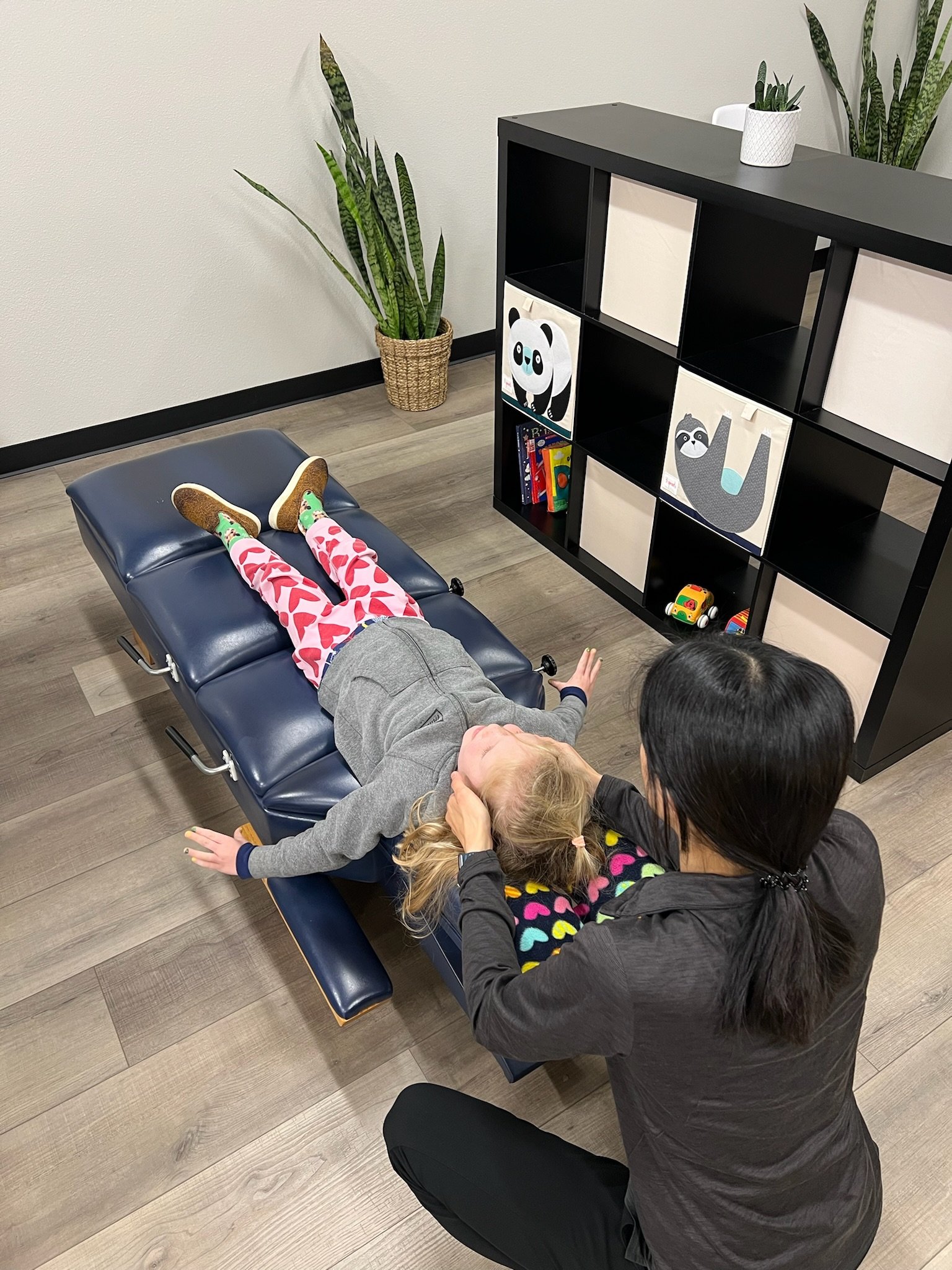
2. We use gentle techniques made for kids. We're trained through the ICPA and PX Docs and use Sacro-Occipital Technique (SOT), cranial work, and gentle instrument-assisted adjustments. These are light-touch methods with no twisting or cracking. Many adjustments happen while your child plays, sits on your lap, or moves around the room. We adapt to short attention spans; we don't fight them.
3. We add low-level laser therapy when it fits. The brain is one of the body's most energy-hungry organs. We use the Erchonia XLR8 and GVL lasers to support mitochondrial health, the energy-making part of every cell, and the body's natural healing. The lasers produce no heat, and most kids play right through their session.
4. We go at your child's pace. We never rush or force. Kids who start out anxious often need a few visits to feel safe with us, and that trust is part of the work.
5. We support the team you already have. We see our role as helping your child's body become calm enough for therapy, school, and medication, if your child takes it, to work as well as they can.
What a care plan looks like
Our typical plan for autistic kids, including those with ADHD:
• Length: 3 months to start
• Frequency: 3 visits per week
• Progress exams: every 12 visits, so we can check how your child is changing and adjust the plan
Why so often? The nervous system learns through repetition. Neuroscience research on how the brain rewires itself shows that repetition, intensity, and time all matter: a new pattern needs to be reinforced often, over weeks and months, before it holds (Kleim & Jones, 2008). Most of that research comes from rehabilitation rather than autism specifically, so we treat it as a guide and adjust the plan to each child. We explain this in more detail in our constipation guide.
One family's story
One family came to us for their daughter, who is autistic, nonverbal, and has a hard time with focus. At her first visits she was a bit anxious and needed her mom close by.
Over time, her parents noticed real changes in her attention. She became more alert to what was happening around her, and she could sit and focus for longer stretches than before. She also grew calmer and more comfortable at each visit.
Her parents are clear that they still have a long way to go. Their next goals are speech and some behaviors. But as they put it, now that her body is calmer, they're hopeful about what comes next.
Every child is different, and results vary. We share stories like this with families' permission to show what progress can look like.
Frequently asked questions
Can chiropractic care help my child with autism and ADHD focus better? We don't treat autism or ADHD. We focus on the nervous system, which plays a big role in attention. Many families in our practice notice their child can sit, attend, and engage for longer, but every child responds differently.
Can my child keep taking ADHD medication during care? Yes. We work alongside your child's medical care, not instead of it. Any change to medication should be made with your child's doctor.
My child can't sit still. How do you adjust a child who won't lie down? We don't need them to. We adjust kids while they play, stand, sit on your lap, or move around the room. Our techniques are gentle enough to work in short moments.
Is chiropractic safe for a child with autism and ADHD? Pediatric chiropractic uses very light pressure, much less than adult care. We're trained specifically in pediatric techniques and adapt every visit to what your child can handle that day.
How is Sprout different from a regular family chiropractor? Our care is built around the nervous system and around neurodivergent kids. We use INSiGHT scans to see where your child is starting, pediatric-specific techniques like SOT, cranial work, and gentle instrument-assisted adjustments, plus low-level laser therapy, all within a structured plan with regular progress exams.
Your next step
If you're tired of strategies that work one week and fall apart the next, we'd love to meet your family.
Your Initial Visit happens in two parts:
1. Visit 1: a conversation about your child's history, a gentle chiropractic exam, and INSiGHT nervous system scans
2. Visit 2: we walk you through what we found and recommend a care plan, so you can decide what's right for your family
We're located at 8799 Balboa Ave in Kearny Mesa, San Diego. We accept HSA and FSA cards.
Read More Articles Like This
Why Stress Hits Neurodivergent Kids Differently
Can Light Therapy Help Kids with Autism?
Why Is My Autistic Child Always Constipated? A Nervous System Guide for San Diego Parents
Sources
Kleim & Jones, 2008,J Speech Lang Hear Res: principles of experience-dependent neural plasticity
Proudly supporting kids with Autism across Clairemont, Mira Mesa, Scripps Ranch, Kearny Mesa, La Jolla, and all of San Diego
Sprout Family Chiropractic | Pediatric + Nervous System Experts
Disclaimer: This article is for educational purposes and is not intended as medical advice. Always consult your child’s healthcare provider for personalized guidance.