
It's barely November, and you've already lost count. A cold the second week of school. A stomach bug a week later. Then another runny nose, another missed week of therapy, another night up with a feverish child who can't tell you what hurts.
And being sick is harder for your child than for most. Routines fall apart. Sleep gets worse. Meltdowns get bigger. Every illness seems to set back the progress you've worked so hard for.
You find yourself wondering: is this normal? Or is something about my child's body making it harder to stay well?
The short answer
Young children catch a lot of colds, and some of what you're seeing is completely normal. But research has also found immune differences in many autistic kids, and the things that keep the immune system strong, like deep sleep, a calm nervous system, and a healthy gut, are often the very things autistic kids struggle with. Supporting those foundations, alongside your pediatrician's care, can help your child's body handle illness more easily.
First, what's normal?
It may help to know how often kids usually get sick. According to University of Utah Health pediatrician Cindy Gellner, MD, toddlers and preschoolers average about 7 to 8 colds a year, and school-age kids about 5 to 6. Kids also typically have 2 to 3 stomach bugs a year.
So if your 4-year-old started preschool or TK this fall and seems to catch everything, that alone isn't unusual. Young immune systems learn by meeting new germs, and classrooms are full of them.
What Dr. Gellner notes is that kids with true immune disorders don't usually get more colds. They get more serious infections, have trouble recovering, or don't grow well. We cover those warning signs below.
What research says about immunity in autism
Researchers have been studying the immune system in autism for years. A 2023 review in Brain, Behavior, and Immunity found that many studies report higher levels of inflammatory signals in autistic people, and that some immune cells may react more strongly when activated.
The authors are careful to say the evidence shows a link, not a cause, and that studies vary. But it fits what many parents notice: their child's body seems to react to illness differently, and it takes longer to bounce back.
The immune system doesn't work alone, either. It's closely tied to the nervous system, sleep, and the gut, three areas where many autistic kids already struggle.
The nervous system piece
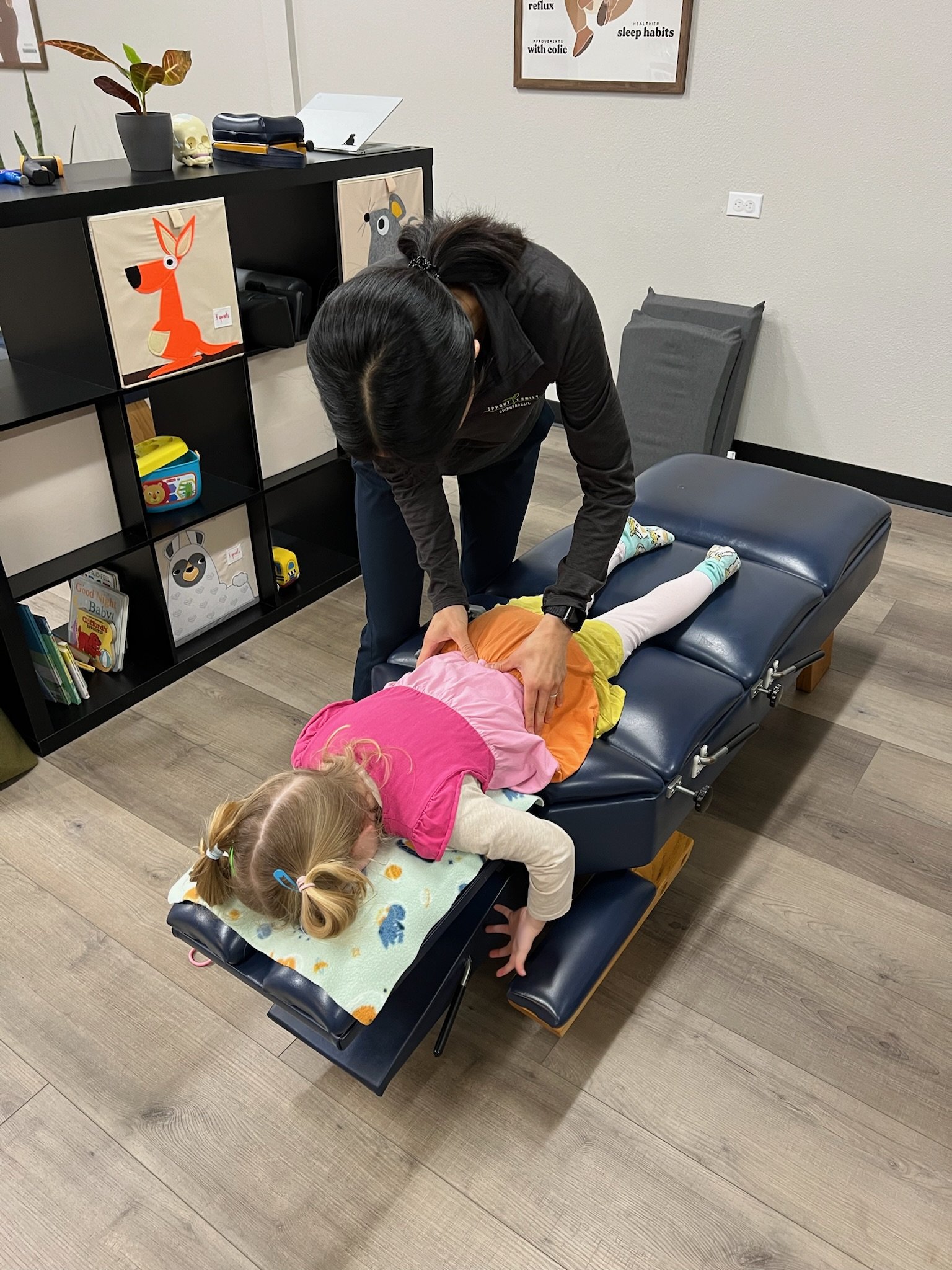
San Diego gentle pediatric chiropractic for kids with autism
Stress and the immune system
When the body is in fight-or-flight, it releases stress hormones like cortisol. In short bursts, that's helpful. But when stress runs all day, every day, those same hormones can wear down the body's defenses over time.
Many autistic kids spend much of their day on high alert: noisy classrooms, transitions, sensory overload, and constant effort to hold it together. A body that's always bracing for the next threat has fewer resources left for fighting off germs and recovering from them. (We describe this stress pattern in Is My Child Stuck in Fight-or-Flight?)
The vagus nerve plays a role here too. It's the main pathway of the body's calming "rest-and-digest" system, and it also helps regulate inflammation. We dig into that connection in our earlier post, The Vagus Nerve, the Immune System, and Your Child's Brain.
Sleep and the immune system
Sleep is when the body does much of its repair work, including immune work. A review in the Journal of Immunology Researchdescribes how sleep and immunity affect each other in both directions: lack of sleep can weaken the immune response and raise the risk of infection, and shorter sleep has been linked to more colds.
That's a hard reality for autistic kids, who often wake at night or rise very early. And it works both ways: being sick disrupts sleep, which can make the next illness easier to catch. (See Night Waking and 5 a.m. Wake-Ups)
The gut and the immune system
Much of the immune system lives in and around the gut. Constipation, a limited diet, and an unhappy belly are all common in autistic kids, and they can make it harder for the body to stay balanced. Our posts on constipation and the gut–brain–immune connection go deeper.
Why being sick hits autistic kids harder
Even a mild cold can feel huge to a child who already struggles with sensory input and regulation. A stuffy nose, a sore throat, or a fever is a lot of new, uncomfortable sensation. Many kids can't tell you what hurts, so it comes out as meltdowns, refusing food, or regression in skills. That's why illness can feel so disruptive in your house, even when it isn't medically serious.
What helps at home
• Protect sleep, especially during cold season. Consistent bedtimes and wake times, a dark room, and a calm wind-down routine.
• Build in recovery time. After a busy school day, a quiet hour at home can help your child's nervous system come down from high alert.
• Support the gut. Water, fiber from foods your child will actually eat, and addressing constipation with your pediatrician.
• Keep hand-washing sensory-friendly. If the soap, water temperature, or towel is the problem, try a foaming soap, a favorite scent, or a soft towel.
• Plan for sick days. A visual "sick day" schedule, familiar comfort items, and lowered expectations help your child cope when their routine falls apart.
• Expect some regression, and know it usually passes. Many parents notice skills slip during illness. They typically return as your child recovers.
• Keep up with your pediatrician's recommendations for well-child checkups and preventive care.
When to call your pediatrician
Frequent colds alone are usually normal. Talk to your child's doctor if you notice:
• Serious infections, like pneumonia, more than once
• Illnesses that drag on much longer than expected or keep coming back right after treatment
• Frequent ear or sinus infections
• Poor weight gain or growth, or your child doesn't seem well between illnesses
• A runny nose, sneezing, or nose-rubbing that lasts more than a month without fever, which can point to allergies
• Any sign your child is in pain and you can't tell where
And always seek care right away for trouble breathing, signs of dehydration, a stiff neck, unusual drowsiness, or a high fever that won't come down.
How we approach this at Sprout Family Chiropractic
We want to be clear: we don't treat illness, and chiropractic care is not a substitute for medical care or your pediatrician's recommendations. We focus on the nervous system and the everyday challenges that come with it, including the stress, sleep, and gut patterns that are closely tied to how a body handles illness.
1. We look at the foundation. INSiGHT scans at your child's first visit show how their nervous system is handling stress. We also ask about sleep, digestion, and how often your child gets sick and how long they take to recover.
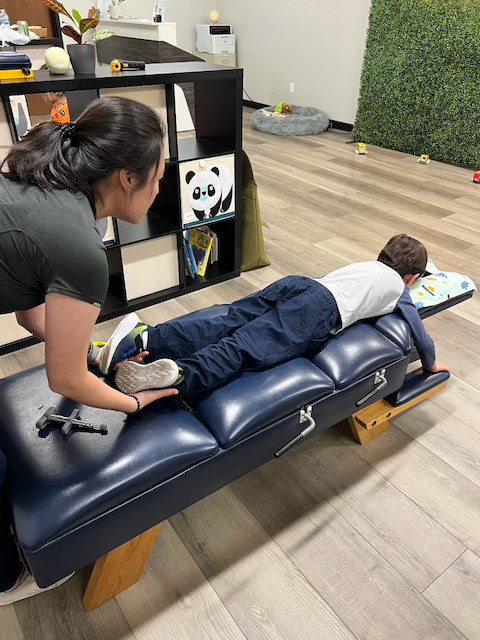
2. We help the nervous system spend less time on alert. We use Sacro-Occipital Technique (SOT), cranial work, and gentle instrument-assisted adjustments, always at your child's pace.
3. We add low-level laser therapy when it fits. We use the Erchonia XLR8 and GVL lasers, 5 to 10 minutes a session, to support mitochondrial health and the body's natural healing.
4. We work alongside your pediatrician. If something you describe sounds like it needs medical attention, we'll tell you.
One San Diego family's story

One mom brought in her 4-year-old son because he seemed to catch every cold that came around. Each one took about a week to get over, and the whole family felt it: the waiting, the doctor visits, the worry. Her goals were simple. She wanted less stress for the family, less discomfort for him, and a happier boy.
About a month into care, she noticed bedtime getting easier, better sleep, better digestion and bowel movements, and fewer tantrums. "He still gets congested and coughs," she told us, "but he takes less time to recuperate, which is good."
A month later, she described him as more relaxed, with more balanced energy. By the end of his care plan, she said his cough was better and his sinus congestion had eased. "It isn't a week anymore, just a couple days."
What she valued most was how it changed the feeling at home. When he coughs now, she said, "we know he is going to be okay."
Every child is different, and results vary. We share stories like this with families' permission to show what progress can look like.
Frequently asked questions
Do autistic kids get sick more often than other kids? Research hasn't settled that question. Studies have found immune differences in many autistic people, and many parents notice their child takes longer to recover. Sleep, stress, and gut health, which are often harder for autistic kids, all play a role in how the body handles illness.
Can chiropractic care boost my child's immune system? We don't make that claim. We focus on the nervous system, including the stress, sleep, and gut patterns that are closely connected to how the body handles illness. Your pediatrician remains your child's go-to for preventing and treating illness.
Why does my child seem to lose skills when they're sick? Illness is a big stressor for the nervous system, and many autistic kids temporarily regress during and after being sick. Skills usually return as your child recovers. If they don't, talk with your pediatrician.
Should we keep coming to visits when my child is sick? Please call us first. If your child has a fever or a contagious illness, we'll usually reschedule to protect your child and the other families in our office.
How do I know if it's just colds or something more? Frequent colds are usually normal for young kids. Repeated serious infections, slow recovery, or poor growth are reasons to see your pediatrician.
Your next step
If it feels like your child goes from one illness to the next and never fully bounces back, we'd love to help you look at the foundation underneath.
Your Initial Visit includes a gentle exam and INSiGHT nervous system scans, followed by a second visit to review results and talk through a plan. See what to expect at your child’s first visit.
We're located at 8799 Balboa Ave in Kearny Mesa, San Diego. We accept HSA and FSA cards. Have questions first? Call us at (619) 786-4886.
Sources
Proudly supporting kids with Autism across Clairemont, Mira Mesa, Scripps Ranch, Kearny Mesa, La Jolla, and all of San Diego
Sprout Family Chiropractic | Pediatric + Nervous System Experts
Disclaimer: This article is for educational purposes and is not intended as medical advice. Always consult your child’s healthcare provider for personalized guidance.