
The invitation comes in: Thanksgiving at Grandma's. Twenty people, a loud TV, a dog, a table full of foods your child won't touch, and an aunt who's sure your child "just needs to try a bite."
You love your family. You want your child to be part of it. But you're already doing the math: how long you can stay before the meltdown, where your child can escape to, and what you'll say when someone asks why they won't hug Grandpa.
The holidays are supposed to be joyful. For many families of autistic kids, they're mostly exhausting. That doesn't mean you're doing them wrong. It means your child's nervous system is being asked to handle a lot at once.
The short answer
Holidays pile on almost everything that's hard for autistic kids: broken routines, crowds, noise, new foods, travel, and late nights. A child whose nervous system is already running on high alert has very little room left for all of it. Planning ahead, building in recovery time, and protecting your child's basics like sleep and safe foods can make the season much more manageable for everyone.
Why the holidays are so hard on your child's nervous system
Think about what a typical holiday asks of a child:
• No routine. No school, no therapy, different wake-up times, meals at odd hours. Predictability is how many autistic kids feel safe, and the holidays take it away.
• Sensory overload. Crowded rooms, overlapping conversations, music, flashing lights, cooking smells, and scratchy holiday clothes.
• Social demands. Hugs, eye contact, small talk, sharing toys with cousins they barely know, and being watched.
• Unfamiliar food. Tables full of new dishes, and well-meaning relatives pushing them.
• Less sleep. Late dinners, travel, and excitement all cut into sleep, which makes everything else harder the next day. (If your child already wakes at night or rises at 5 a.m., the holidays can make it worse.)
• Gut changes. Different food, less movement, and stress can all bring on constipation or tummy troubles.
Each of these is a stressor. Together, they can keep your child's body in fight-or-flight for days at a time. That's why the meltdown often doesn't happen at the party. It happens the next morning over the wrong cereal, after the nervous system has been running on empty. (We explain this stress pattern in Is My Child Stuck in Fight-or-Flight?)
Your holiday plan: before, during, and after
Before
• Preview what's coming. A few days ahead, talk about what will be different: where you're going, who will be there, where your child will eat and sleep. Texas Children's Hospital recommends visual schedules and social stories to help kids know what comes next.
• Show photos. Pictures of the house and the relatives your child will see make new places and faces feel more familiar.
• Decorate gradually. Put decorations up a few at a time and let your child explore them, instead of transforming the house overnight.
• Rehearse. Practice greetings, opening gifts, or saying "no thank you" using however your child communicates: words, signs, pictures, or a device.
• Protect sleep the week before. A well-rested nervous system has more room to handle the extra stress.
During
• Plan a quiet space. Ask the host for a bedroom or corner where your child can take breaks. Bring headphones, a tablet, and comfort items.
• Bring safe foods. Pack foods your child reliably eats. A holiday meal is not the time to work on new foods. (Here's why the table is so hard for many autistic kids.)
• Set a time limit. Decide in advance how long you'll stay, and leave while things are still going well. Ending on a good note is a win.
• Watch for early signs. Covering ears, pacing, hiding, or getting louder often come before a meltdown. Take a break before it builds.
• Use movement and pressure. A walk outside, jumping, or a big squeeze can help your child reset, especially kids who are sensory seekers.
• Have a partner on duty. Take turns being the adult who steps away with your child, so both of you get some time with family.
After
• Plan a recovery day. Keep the day after quiet, with familiar routines and low demands.
• Expect a delayed reaction. Many kids hold it together during the event and fall apart later. That's the nervous system releasing stress, not bad behavior.
• Get back to routine quickly. Familiar wake-up times, meals, and activities help the body settle.
If you're traveling
• Use a visual travel schedule: car, airport, security, airplane, Grandma's house.
• Contact TSA Cares if you're flying. TSA offers a helpline for travelers with disabilities, including autism, that explains what to expect at security and can arrange extra help at the checkpoint. Call (855) 787-2227 at least 72 hours before your flight.
• Ask about a Sunflower lanyard. Many airports and airlines take part in the Hidden Disabilities Sunflower program, a lanyard that quietly lets staff know a traveler may need extra time or patience. Check with your airport and airline before you fly.
• Pack a sensory kit for the trip: headphones, snacks, a chewy, a favorite toy, and a change of clothes.
• Build in buffer time. Rushing is one of the fastest ways to tip a child into overwhelm.
• Stick close to home routines at your destination, like bedtime, bath, and favorite books.
Talking to family
Relatives usually want to help. They just don't know how. A short message before the gathering can save a lot of hard moments. You might say:
"We're so excited to see everyone. A few things that help [your child's name] enjoy family time: big crowds and loud noise can be overwhelming, so they may need breaks in a quiet room. They'd rather wave than hug. We'll bring foods they like, so please don't worry if they don't eat what's served. Thanks for helping make it a good day for them."
It's also okay to say no. Skipping an event, arriving late, or leaving early to protect your child isn't rude. It's good parenting.
How we support San Diego kids through the holidays at Sprout
We can't make the holidays stress-free. What we focus on is your child's nervous system, so their body has more capacity to handle the extra stress when it comes.
We look at the foundation. INSiGHT scans show how your child's nervous system is handling stress, and we ask about sleep, digestion, and regulation.
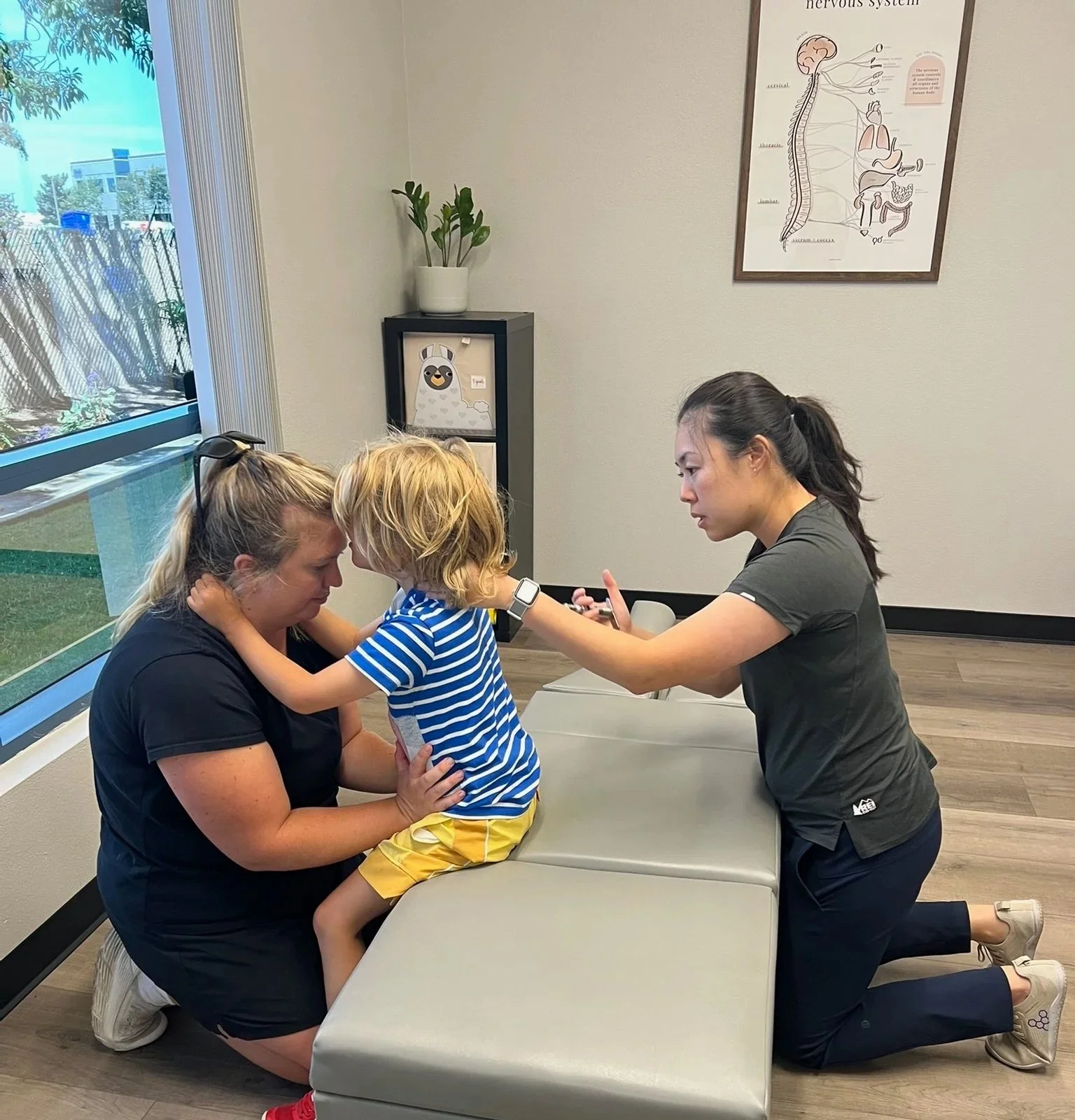
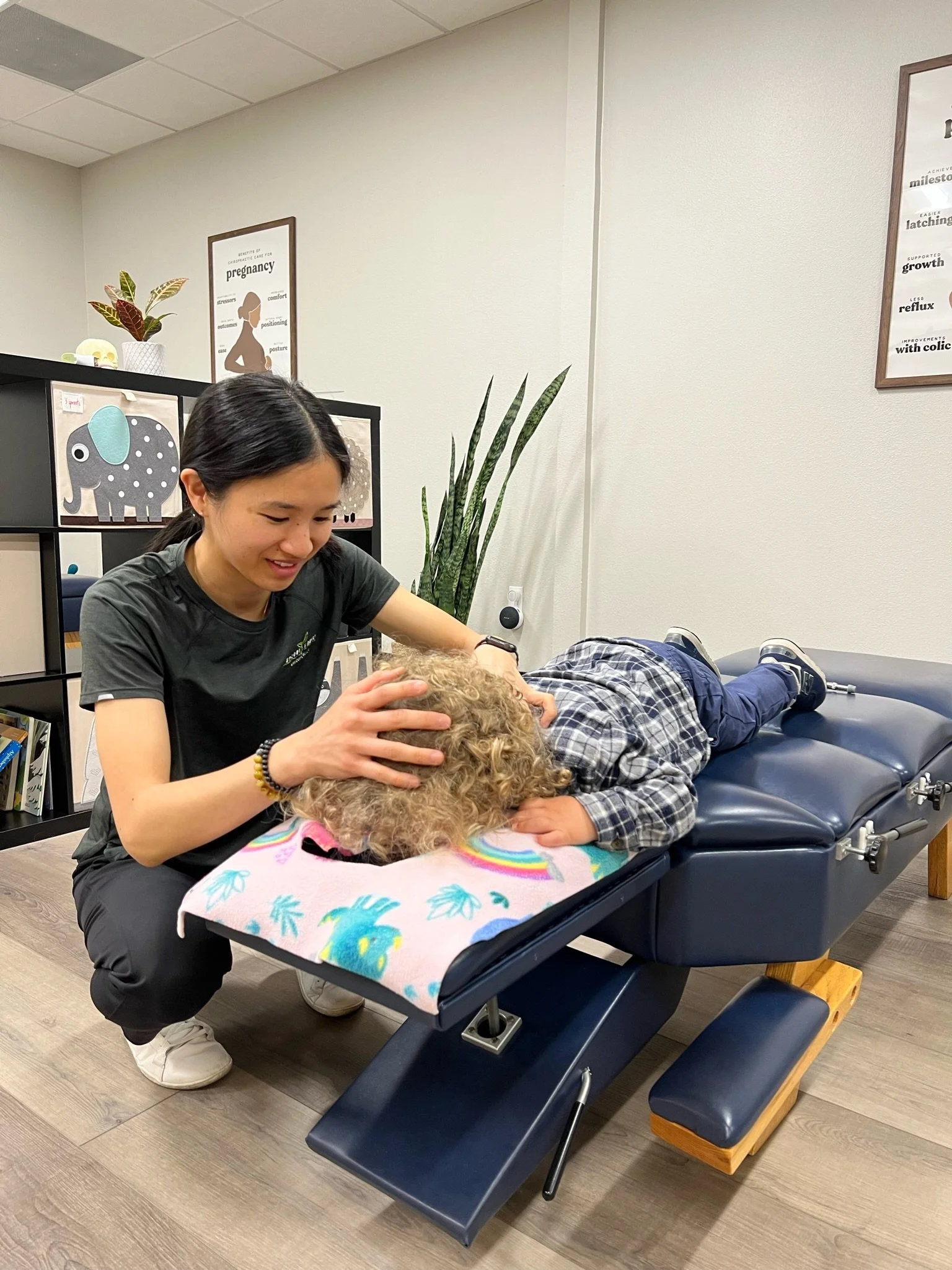
We help the nervous system spend less time on alert. We use Sacro-Occipital Technique (SOT), cranial work, and gentle instrument-assisted adjustments, always at your child's pace. Many families notice their child bounces back from busy days more easily.
We add low-level laser therapy when it fits, using the Erchonia XLR8 and GVL lasers, 5 to 10 minutes a session, to support mitochondrial health and the body's natural healing.
We plan around your holiday schedule. If you're traveling or your routine changes, talk with us and we'll work out a schedule that keeps care consistent.
What care looks like
Lasting change in the nervous system comes from consistent care over time, not a single visit, and every plan is built around your child. Learn more about how we care for neurodivergent kids.
Frequently asked questions
Should we skip holiday gatherings altogether? Not necessarily. Many families find a shorter visit, a quiet space, and a clear plan make gatherings work. But if an event would cost your child more than it gives, it's okay to skip it or celebrate in a smaller way.
Why does my child melt down the day after the holiday? Many autistic kids hold it together during big events and release the stress later, once they're somewhere safe. Plan a quiet recovery day after big gatherings.
How do I handle relatives who don't understand? A short, friendly message before the event explaining what helps your child goes a long way. You don't owe anyone a long explanation for protecting your child.
What if my child won't eat the holiday meal? That's okay. Bring safe foods and let the meal be about being together, not about eating new things.
Should we keep up chiropractic visits during the holidays? Consistency helps, especially during a stressful season. If you're traveling, let us know and we'll plan your schedule around it.
Your next step
If the holidays leave your child dysregulated for days afterward, we'd love to help you look at what's happening in their nervous system.
Your Initial Visit includes a gentle exam and INSiGHT nervous system scans, followed by a second visit to review results and talk through a plan. See what to expect at your child’s first visit.
We're located at 8799 Balboa Ave in Kearny Mesa, San Diego. We accept HSA and FSA cards. Have questions first? Call us at (619) 786-4886
Proudly supporting kids with Autism across Clairemont, Mira Mesa, Scripps Ranch, Kearny Mesa, La Jolla, and all of San Diego
Sprout Family Chiropractic | Pediatric + Nervous System Experts
Disclaimer: This article is for educational purposes and is not intended as medical advice. Always consult your child’s healthcare provider for personalized guidance.